African Telescope Independent Journalism. African Perspectives
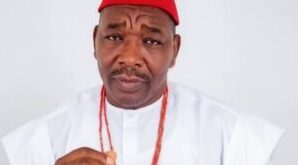
The Olu of Owode Ofaro Kingdom, Ifelodun Local Government Area of Kwara State, Nigeria, Oba Abdulraheem Babatunde Ayilara, Asunmogejo II, in this interview with OYEDUNMOLA OLAKUNLE, addresses fetish practice of butchering deceased kings, Nigeria’s worsening security situation, among other issues.
Tell us about your emergence and coronation process.
My coronation process began after the demise of the late king, Oba Olawepo Oyedunmola, who reigned for 38 years between 1960 and 1998. He passed on in 1998, and I was selected in the year 2000 to assume the leadership. My kingship involved a lot of processes. I think it wasn’t easy to decide who would replace someone who had ruled for 38 years. The kingmakers and royal lineages carried out a series of consultations before the final selection, because we had many royal princes from the lineage who were prospects at that time. Initially, I didn’t expect it, but after the process, I was chosen from among the ruling houses. I became Oba on the 19th of September, 2000, but the official installation took place on the 20th of October, 2000.
How many ruling houses do you have in your community?
We have three ruling houses in Ofaro Kingdom: Oke Alani, Ododiogunla, and Oke Egbe. I am from Oke Alani, while the late king was from Ododiogunla.
How would you describe the role of traditional leadership in today’s modern governance system?
Honestly, the role of traditional rulers in today’s modern governance system has diminished to some extent. We have no role to play in government, except ruling our respective communities. In the olden days, traditional rulers played a lot of roles in the government sector and were considered key figures. Today, that has changed. For about five years now, we’ve been pushing and mounting pressure so that the role of traditional rulers can be formally recognized in the system of governance. We have the federal, state, and local governments, and we believe traditional rulers should also have a defined role, what we refer to as “the House of Ships.” That’s what we’re expecting so we can bring back our relevance in governance, because we have many roles to play. Currently, our role is purely advisory—which the government may or may not take. However, in most cases, because government officials are our sons and daughters, they give us respect. So, whatever advice we give is taken at least 80% of the time. Still, our role remains advisory in nature.
What do you think can be done to address this issue?
We need to have a key role to play in government, which is very important. If this happens, we’ll be able to restore certain values and systems that have been lost over time.
What are the challenges you’ve faced as a king, and how do you navigate them?
There are lots of challenges. As a king, some people in the community will give you maximum support, while others will not—and this applies not only to me but to other kings as well. For instance, when a king progresses—maybe by buying a new house or car—some people assume he’s using the community’s resources for personal gain, forgetting that before becoming king, he may have had a job or friends who support him. Personally, I have friends and loved ones who assist with some of these things, unless I tell them not to. I think people should learn to be happy and celebrate when their king achieves something good, because whatever he acquires is still part of the community.
There was controversy recently about the burial of the Awujale, who was buried according to Islamic rites rather than traditional ones. What’s your take on it?
There are different opinions on the matter. Some believe burying him in Islamic rites was right, while others feel it was against tradition. Those against it say it had never been done that way before. Those who supported it believe it’s time to change the tradition. Personally, I believe it’s not easy—and won’t be easy—to change any tradition. Both Muslims and Christians, who happen to be our colonial masters, only came to take our resources and introduced their religions to change our minds. These religions have changed our mindset. How can the Awujale—one of the leading traditional rulers in Nigeria and Yoruba land—be buried according to a religion? That’s not how it should be. But there’s nothing we can do, since others are doing the same. Honestly, we shouldn’t completely deviate from our traditions and cultural heritage.
The Oluwo of Iwo applauded the Awujale’s burial rites, suggesting it was a departure from the traditional system of butchering kings and other rituals. How true is it that kings are butchered?
It is not true that kings are butchered. Our cultural heritage does not say that when a king dies, he should be butchered—no. Although, they used to say that the heart of deceased kings was removed for the new one to eat. I believe that practice is now history. That’s why I say some aspects can be removed or modified, but we shouldn’t throw away our cultural heritage. I can’t understand how anyone would butcher someone. He wasn’t born butchered, and you want to send him to God butchered? It’s not like he had an accident. If such a practice still exists anywhere, I think it should be stopped. I wouldn’t expect my community to butcher me after my death in the name of tradition. We must understand that life is dynamic. If that was happening in the past, I advise all communities—including mine—to stop it outrightly and allow kings to die and be buried just like every other human being. After all, a king is also human like others.
‘Tinubu should equip police, establish state security to curb kidnapping’

What are some of the myths of kingship that you believe are wrongly perceived?
Some people believe that an Oba is an invisible person and someone who cannot be touched. But gone are those days. The Obas of today have nothing, and that was why the Awujale was buried according to Islamic rites. How will an educated king like myself engage in such practices? If not for the issue of kidnappers that has made everyone seek fortification and protection, it wasn’t like that before. Secondly, there’s a myth that once a king is installed, the committee members should distance themselves from him. There’s a saying: “I move closer to the king six times and move away from the king seven times.” That seventh step shows you’ve completely moved away. Many people run from you once you’re appointed as a king because it’s built into their mindset that the life of a king is different from that of an ordinary person. No, there is no difference. We are simply representatives of the community—we are servants. Thirdly, on the religious aspect, any king should not be attached to a particular religion. A king should be able to associate with all three religions. It is the duty of a king to participate directly or indirectly in whatever they want to do. An Oba should see himself as someone who belongs to all religions. That is how you can find peace within yourself and in your community.
Youth restiveness is a major concern in society. How do you think the government and traditional institutions can collaborate to address this?
This is one of the major problems in our society today. Many of our youths are now money mongers. That’s why you see them engaging in cyber fraud, rituals, robbery, kidnapping, and so on—they want money at all costs. You can’t blame everything on the youth because many of them are graduates with no job and are struggling to survive. For instance, a friend who is also an Oba came to my palace with the result of a young man who graduated and served 15 years ago but still couldn’t find a job. The boy had gone to him and said, “Daddy, I’ve thought otherwise. I’m now considering another way out. Maybe I’ll have to kill myself. I’ve been job-hunting for 15 years with no success.” The young man is married with a child, but he can’t cater to them. His wife is also a graduate but unemployed. The Oba had no choice but to start taking the young man’s CV around, seeking help. That boy chose to wait until he found a job because he didn’t want to tarnish the image of his family or community by going into crime. So, there are many like him—graduates who can’t find jobs. The government should please create job opportunities. Even if it won’t reach everyone, at least it will reduce the unemployment rate. Government should, please and please, create jobs for its citizens.
Many young people are focusing on ‘Japa.’ Do you think the government is doing enough to curb this, and what should be done?
Many are focusing on Japa because there are no jobs in the country. The government is supposed to create job opportunities. Anyone who has a stable job and earns a good salary won’t be desperate to travel abroad in search of greener pastures. It’s said that “an idle hand is the devil’s workshop,” so government must create jobs, especially for the youth, because they are the leaders of tomorrow. There are monarchs and individuals who own companies. They should also help by employing our youths, because the government cannot do it alone. All efforts must be geared toward providing jobs for the youth. Royal fathers should also play their role by encouraging our children to go to school and learn vocational skills. This will help reduce unemployment. We should also help them secure jobs to sustain themselves and their families. May God help us!
Many have continued to clamour for state and community police. What is your take on this?
Honestly, clamouring for state and community police is very necessary and essential at this crucial time. One, it provides employment for our youth that I’ve just talked about. Our youth will get jobs. For the community police officers, the moment they know they are going to be paid by the federal, state, or local government, they will surely rush to it. They will be employed, have jobs, and be proud that they have something to eat at the end of the day. They will be able to take care of their families. So, why it is supported is because of employment—so that our youths can get jobs—and that is one of the areas where they can be engaged. Two, in the area of fighting kidnappers and other bad elements. Now, if the communities have police officers—together with those from the state and federal—working with them, it will help. The community will be able to sleep well. We will know that we have people who can defend us in our community. But look at what is happening today: in most communities, 70% have no police—not even a single officer—and that cannot help. You can only help a community if the police are around. Even if they are going to work with other members of the community like the vigilantes or OPC, their presence gives assurance that government personnel are involved. So, I think having the police at both the state and community levels—fully paid—will help everybody. Not just those employed, but every member of the community. So, I’m strongly in support of having state and community police.
How have you been able to manage the herder-farmer crisis within your community?
I believe in my community, Owode Ofaro, we’ve been able to manage this very well. The reason is because, for the past eight or nine years, I have not been allowing new Fulanis to settle in my community. Anyone that comes around and we’re able to detect, our hunters, vigilantes, and others direct them to leave—we send them away because we don’t want new settlements. We’ve been doing that for the past nine years and it has helped us to some extent. The problems between herders and farmers are minimal in my community. Not that you can completely stop it, because there’s no way cows won’t occasionally enter someone’s farm. But when it’s reduced to the barest minimum, it’s manageable and won’t cause much trouble. The problem is when the Fulanis are too many with their cows—then there’s no way they won’t completely destroy the farms, and that always causes a lot of problems. Occasionally, it does happen in Owode Ofaro too, but we thank God that in Owode Ofaro, Idoba, Obinin, and some other nearby communities, we’ve been working together to curb the menace of Fulani herders. And we thank God, because such a thing cannot be handled in isolation. Owode Ofaro alone cannot do it because we have other communities around. So, it has to be a joint effort between Owode Ofaro and other communities—not just Idoba and Obinin. In many cases, we contact Ora, Odo Ore, Oke Aba, Ikosin, Aafin, and some other places when we want to send these people away. The vigilantes and hunters join hands together to ensure that these people are driven out. So, we’ve been doing that and managing it effectively. In our area, we thank God that we have not been recording anything terrible in that regard. Thank God!
Tell us about your most memorable moments as a king that significantly shaped your life and that of your subjects?
I think what changed the life of the Olu of Owode Ofaro was, firstly, the grading of the Olu of Owode Ofaro Kingdom. Based on our history in the area, up to 2002, we had not been graded. But during the administration of Mohammed Lawal, the Olu of Owode Ofaro was graded as a third-class king in 2003. When another government came in, some of us were demoted in 2005, but we were later re-elevated to third class again. So, the grading of the Olu of Owode Ofaro is one of the unforgettable moments that actually helped the life of the king and even the community members. To enjoy more benefits, the government needs to assist us, because the Olu of Owode Ofaro is not supposed to remain a third-class king. He has already received third-class grading twice, so by now, the Olu should be a second-class graded king. I am now appealing on behalf of the Owode Ofaro community to the government of our able and amiable Executive Governor of Kwara State, Mallam AbdulRahman AbdulRazaq, to please come to our aid by upgrading the stool of the Olu of Owode Ofaro to a second-class Oba. We believe it will be done soon. We, the entire community, give kudos to His Excellency for what he has been doing. He has really helped us in Owode Ofaro. We are now pleading with him to assist us further by upgrading the Olu of Owode Ofaro to a second-class Oba.
With growing insecurity and socio-economic challenges across the country, what is your advice to President Bola Tinubu?
That is a very good question because insecurity persists daily, and it is the major problem in Nigeria today. The killings, kidnappings, and extortion are becoming barbaric and very sad. Imagine someone who was kidnapped and cannot even raise one million naira, being asked to pay one hundred million. Where would such a person get that kind of money? My advice to President Bola Tinubu is that he should focus more on security, which he has already started doing. One part of it is the establishment of the Forest Guards. He should also advise governors and local government chairmen to employ forest guards to support the police. More police officers should be recruited, and the states should be empowered to employ state police, which will still be supervised by the federal police. Soldiers should also be equipped. All these security personnel must be well equipped because there is no way to face kidnappers without being properly armed. Our able and amiable President should please assist us in building up our security. The way people are entering from other countries is a major problem. Our borders should be properly secured to prevent foreigners from entering unnecessarily, because most of these kidnappers are not Nigerians; many of them come from neighboring countries. So, how are they getting into our country? That means we must take action to stop it. President Bola Tinubu should please do more on the issue of security because that is the major problem we have in Nigeria today. He should assist Nigerians by strengthening our security system.