African Telescope Independent Journalism. African Perspectives
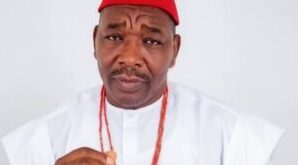
President of the Nigerian Medical Association (NMA), Prof. Bala Audu, in this interview with OLUMIDE OLUSEGUN, addresses critical issues affecting Nigeria’s health sector — from the association’s recent engagements with the Federal Government, welfare of doctors and poor hospital infrastructure to the brain drain of medical professionals, among other issues.
Your association recently said it would commence strike action if the Federal Government fails to meet your demands. What are these demands?
Our demands were clearly stated in the letter communicated. They mainly have to do with the withdrawal of a circular from the National Salaries, Incomes and Wages Commission, which has now been withdrawn. We are working on correcting the issues in that circular. Also, we want the arrears of some of our allowances paid. Some of these arrears have been outstanding for the past 18 months, and we are negotiating the process to ensure they are paid. What we issued was an ultimatum to engage in this process. Our ultimatum did not state a strike action—it was about engagement, and we have started engaging.
What was the basis of rejecting the circular issued by the commission?
The basis for the rejection was that the application of this review was supposed to address allowances, but the circular did not address them. Secondly, there is what is called relativity in pay within the health sector. They did not apply the relativity when they released the circular, and that is what we are reviewing now. Once that is addressed, it will resolve key welfare issues, and other matters can follow.
Since you issued that notice, has the FG spoken with you, and what are they saying about your request?
We have had several engagements at various levels. We met with the Federal Ministry of Health and also had a collective stakeholders’ meeting involving the Federal Ministry of Health, Federal Ministry of Labour, Federal Ministry of Budget and National Planning, Office of the Accountant-General of the Federation, Office of the Head of Civil Service of the Federation, and the National Salaries, Incomes and Wages Commission. So far, we are receiving appropriate responses from the government.
For doctors to go on strike will pose a threat to the lives of many Nigerians. Are you not concerned about what the implication would be?
Nigerian doctors are very sensitive to this. They are concerned and very reasonable about it. The Federal Ministry of Health also recognizes this, and we are working together to ensure that the public is protected and that services are not interrupted at all.
Generally, there are concerns about the Nigerian health sector. How would you describe the situation?
The situation of the Nigerian health sector is twofold. On one hand, we have highly qualified and competent people in the health workforce—so much so that the whole world is coming to Nigeria to recruit them to serve in their countries. On the other hand, we have challenges with our facilities and the working environment within the country. We are working with the government to balance these two, so that conditions and facilities at the workplace are improved. This way, more Nigerian doctors will stay at home to serve the country, just as they currently serve in other countries. The only difference between us and them is equipment. They have better equipment and maintain them better than we do—but they don’t have better doctors or nurses.
These issues have led to a surge in the exodus of doctors to other countries. What can you say about this?
Like I said, there are two major factors. There is the pull factor—the things doctors see in other countries that attract them. Then there is the push factor—the problems within the country that make doctors want to leave. The push factors are largely welfare-related. The welfare in other countries is far better and not comparable. The pull factors include the facilities they have, the respect for the profession, and the good working environment. So, it comes down to two things: improve welfare and improve the working environment, and you’ve solved the problem.
Recently, former President Buhari died in a London hospital. This is one of many cases of political elites and wealthy Nigerians seeking medical treatment abroad. Is this not concerning—that Nigeria has a health system not trusted by the upper class, while the poor are left to cope with poor infrastructure?
The choice of personal healthcare is an individual right and a human rights issue. As a doctor, I am not judgmental. I don’t ask why a patient comes to see me in the hospital—I am just there to give them the care they need. In the same way, I don’t ask, whether someone is highly or lowly paid, why they choose private or public hospitals, or why they go abroad for treatment. These are personal choices. By my Hippocratic Oath, I do not discriminate based on where people choose to seek healthcare. My responsibility as a doctor is to offer care to the best of my ability, using what is available to me.
So do you agree that wealthy Nigerians should patronize local medical facilities more?
That is very true. I think all Nigerians should do that.
In 2023, the former First Lady, Aisha Buhari, said that Nigerian presidents have no need to travel abroad for medical treatments following the inauguration of the N21 billion Presidential Wing of the State House Medical Centre. Yet her husband was flown out, and there have been rumored trips of the current President traveling for medical leave. What does this mean to you?
Well, as regards the facilities at the presidency, I think you will have to interview the people responsible for that. I do not have any idea of what is there. It is not within my jurisdiction. On a general note, public hospitals need an upgrade in infrastructure and improvement in the working environment.
What is your take on the current administration of President Bola Tinubu’s efforts in the sector?
There have been a lot of efforts to improve facilities. There’s been a lot of groundwork, and we are aware that some of those facilities will soon be commissioned. We await their commissioning. As things are unveiled, we are going to see the progress that has been made over the last two years. Remember, when you upgrade facilities, it could take a while to see the impact. But it must be sustainable. It’s not something you do for one year and then expect it to remain okay. This is a continuous process. Maintaining the tempo from year to year, government to government, is what’s needed over time.
At the early stage of this administration, efforts were made to bring back Nigerian doctors working abroad. How do you think this would affect the sector?
It was a good attempt, but one of the things that would make doctors abroad return is their assessment of the conditions of those who decided to stay back. They will compare what they are doing outside the country with what they would be doing if they return.
In your assessment as the NMA National President, do you think that comparison has the potential to convince them to return?
I can tell you about the condition of those at home. As for those abroad, they are in different countries, and I don’t know what obtains there. Those at home have specific challenges with welfare packages, like I’ve just mentioned, and this is what we are trying to address. We also have challenges with the workplace environment, which the Federal and State governments are working on. These efforts cannot yield results with one step. It is something that has to be consistent and sustainable.
In 2023, the former First Lady, Aisha Buhari, said that Nigerian presidents have no need to travel abroad for medical treatments following the inauguration of the N21bn Presidential Wing of the State House Medical Centre. Yet her husband was flown out, and there have been rumored trips of the current President traveling for medical leave. What does this mean to you?
Well, as regards the facilities at the presidency, I think you will have to interview the people responsible for that. I do not have any idea of what is there. It is not within my jurisdiction. On a general note, public hospitals need an upgrade in infrastructure and improvement in the working environment.
What is your take on the current administration of President Bola Tinubu’s efforts in the sector?
There have been a lot of efforts to improve facilities. There’s been a lot of groundwork, and we are aware that some of those facilities will soon be commissioned. We await their commissioning. As things are unveiled, we are going to see the progress made over the last two years. Remember, when you upgrade facilities, it could take a while to see the impact. But it must be sustainable. It’s not something you do for one year and expect lasting results. This is a continuous process. Maintaining the tempo from year to year, from one government to another, is what’s needed over time.
At the early stage of this administration, efforts were made to bring back Nigerian doctors working abroad. How do you think this would affect the sector?
It was a good attempt, but one of the things that would make doctors abroad return is their assessment of the conditions of those who decided to stay back. They will compare what they are doing outside the country with what they would be doing if they return.
In your assessment as the NMA President, comparing what is obtainable in Nigeria and abroad for the health workers, do you see the possibility of their return?
I can tell you about the condition of those at home. As for those abroad, they are in different countries, and I don’t know what obtains there. Those at home face specific challenges with welfare packages, as I’ve mentioned, and this is what we are trying to address. We also have challenges with the workplace environment, which the Federal and State governments are working on. These efforts cannot yield results in one step. It is something that has to be consistent and sustainable.