African Telescope Independent Journalism. African Perspectives
Chibuzor Alli
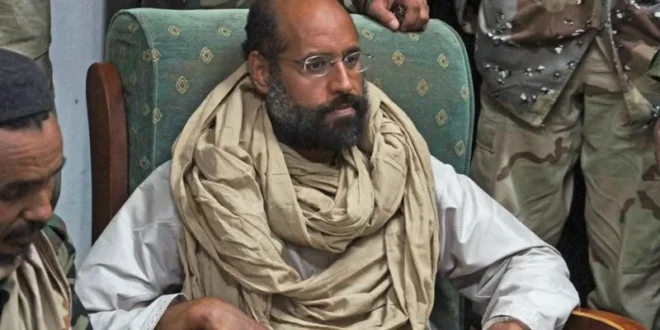
Libyan prosecutors have launched a probe into the killing of Saif al-Islam Gaddafi, the son of the country’s long-time leader, Col Muammar Gaddafi. The 53-year-old, who was once widely seen as his father’s heir apparent, was killed during a “direct confrontation” with four unknown gunmen who broke into his home in Zintan, according to his office.
“The victim died from wounds by gunfire,” Libyan prosecutors stated on Wednesday, adding that efforts are underway to identify the gunmen. However, a different account emerged when his sister told Libyan TV that he had died near the country’s border with Algeria.
Saif al-Islam’s lawyer told AFP that a “four-man commando” unit carried out an assassination at his home in Zintan, though it remains unclear who was behind the attack. The public prosecutor’s office confirmed that forensic experts had been dispatched to Zintan in northwest Libya to carry out investigations.
Once seen as the most influential and feared figure in Libya after his father, Saif al-Islam played a key role in the country’s political landscape until the fall of the Gaddafi regime in 2011. His influence waned after his father’s ousting, during which Saif was imprisoned by a rival militia in Zintan for nearly six years. The International Criminal Court (ICC) sought to put him on trial for crimes against humanity related to the repression of protests.
In 2015, a court in Tripoli sentenced him to death in absentia for his role in the crackdown, but he was released two years later by a militia in Tobruk under an amnesty law. Simpson, who had met Saif al-Islam, recalled that in court, he greeted him with relief, perhaps hoping the BBC crew’s presence might save him from execution. “He had great faith in his negotiating skills and his personal charm, and he managed to win over his captors, who eventually freed him,” Simpson said. “But the loathing many Libyans felt for his father extended to him, and may have brought about his death.”
Analysts suggest Saif al-Islam may have been targeted by locals who saw their political influence threatened by his popularity, or possibly by foreign actors due to his controversial past. Born in 1972, he played a significant role in Libya’s rapprochement with the West from 2000 until the regime’s collapse. Despite accusations of involvement in brutal repression, Saif was considered a reformist by some and was involved in negotiations that led to sanctions relief and the abandonment of Libya’s nuclear weapons program.
He always denied intentions to inherit power, stating that the reins of leadership were “not a farm to inherit.” In 2021, he announced plans to run for president, but the elections were postponed indefinitely amid ongoing instability.