 African Telescope Independent Journalism. African Perspectives
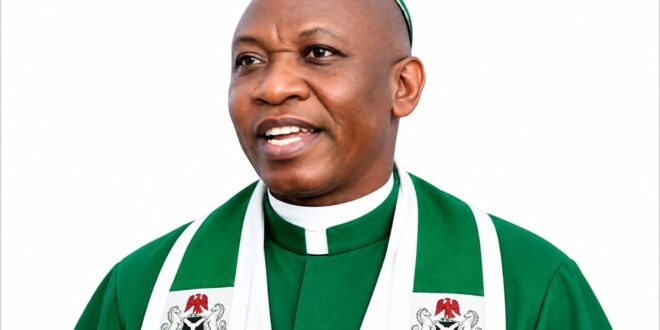
As Nigeria marks its 66th Independence anniversary, the President of the International Fellowship of Ecumenical Ministries, Archbishop Osazee Williams, has called on the Federal Government to ensure that the national anthem is properly taught in schools as a means of promoting national unity and peaceful coexistence.
Williams made the call in a statement on Thursday, urging authorities to move beyond the routine recitation of “Nigeria, We Hail Thee” during school assemblies and ensure that pupils and students understand the meaning and values contained in its lyrics.
The cleric said the anthem carries important messages about unity, service, responsibility and shared national identity, which he said could help young Nigerians appreciate the country’s ethnic, religious and regional diversity.
He particularly cited the line, “Though tribe and tongue may differ, in brotherhood we stand,” describing it as a powerful lesson for a country as diverse as Nigeria.
According to Williams, young Nigerians should be taught that brotherhood goes beyond merely recognising differences, adding that citizens must learn to see one another as fellow Nigerians and work together despite their differences.
“We are teaching them to sing a song of hope without understanding the weight of its promise,” he said.
Williams described the national anthem as “a national covenant” containing a prayer for Nigeria, a commitment to fellow citizens and an expression of the aspirations of the country.
He said the opening line, “Nigeria, we hail thee, our own dear native land,” should be used to encourage students to learn about the country’s history and develop a deeper appreciation of their homeland.
The bishop also drew attention to the line, “Nigerians all, and proud to serve our sovereign Motherland,” saying it could help schools teach young Nigerians the meaning of service and civic responsibility.
“Service is not just a career, but a character. Pride is not just a feeling, but a responsibility,” Williams said.
He further called for the history of the national anthem to be taught alongside its lyrics.
Williams noted that “Nigeria, We Hail Thee” was adopted at independence in 1960 before it was replaced in 1978 and restored in 2024.
He said understanding the anthem’s history would help students appreciate why it was adopted, why it was replaced and the significance of its restoration.
The IFEM president urged the government and educational institutions to incorporate the anthem’s themes into subjects such as history, civic education and literature across primary, secondary and tertiary institutions.
He said literature teachers could examine the language and imagery of the anthem, while civic education could use its messages to teach citizenship, responsibility and national unity.
Williams also urged schools to use the anthem as a basis for discussions on the vision of a Nigeria where “no man is oppressed” and where “peace and plenty” are enjoyed by all citizens.
“Teaching the anthem is not about rote memorisation. It is about nation-building,” he said.
The cleric called on parents, religious organisations and other stakeholders to support efforts to make the national anthem part of broader programmes aimed at promoting unity, peaceful coexistence and responsible citizenship.
Williams said the 66th Independence anniversary offered Nigerians an opportunity to reflect on whether they were merely singing the national anthem or genuinely understanding and living out the values it represents.










