 African Telescope Independent Journalism. African Perspectives
Chibuzor Alli |
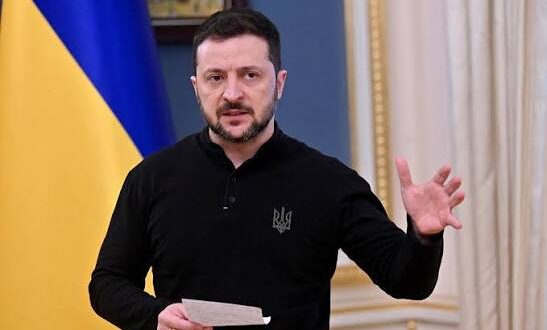
Ukraine’s President Volodymyr Zelensky announced yesterday that the United States has approached Kyiv for assistance in countering Iranian drones targeting Gulf allies.
The Ukrainian leader disclosed that there have been “requests from the American side,” though the Pentagon declined to comment on the matter.
Zelensky emphasized that Ukraine’s support would be contingent upon safeguarding its own defenses and achieving diplomatic gains.
He hinted at a possible exchange — offering to provide interceptor drones in return for more US Patriot missile systems to bolster Kyiv’s defenses against Russian ballistic threats.
The ongoing war in the Middle East has heightened concerns that Ukraine’s allies may become distracted, risking reduced support amid fears that Kyiv could suffer if the conflict escalates elsewhere. Experts also worry about a potential shortage of interceptor missiles and Russia’s profits from rising oil prices, which fund its military campaign.
Despite these risks, Zelensky appears eager to leverage the crisis to advance Ukraine’s national interests.
He has engaged with Gulf leaders in the United Arab Emirates, Qatar, Bahrain, Jordan, and Kuwait, promising “concrete steps” to help defend their military bases and civilian infrastructure from Iranian attacks.
“It is clear what their main request to Ukraine is,” Zelensky wrote on social media.
“Anyone who has faced Iranian strikes encounters a serious challenge — Shaheds, which are difficult to intercept without the proper expertise and adequate weapons.” He added, “It is in our common interest to help people defend themselves and to restore stability in critically important supply routes.”
According to Kyiv, Gulf nations have sought Ukraine’s expertise and practical support against Shahed drones, which are based on Iranian designs and have been used in attacks on Ukraine for years.
The irony of the US requesting assistance from Ukraine, a country that has suffered from Iranian-designed drones, has not gone unnoticed.
Historically, Ukraine’s relationship with the US has been complex.
Under former President Donald Trump, direct military support was curtailed, though Washington still provides vital intelligence that helps Kyiv defend against drones and missile attacks, and target Russian forces.
Now, with Ukraine seeking to turn the tide, Zelensky may be aiming to use this moment diplomatically, militarily, and financially. Kyiv hopes that assisting Gulf allies could earn US gratitude, especially if it helps secure support from Arab nations, some of which maintain close ties with Russia and have remained neutral in the Ukraine conflict.
Gulf delegations have already arrived in Kyiv for talks; sources say some have been told to stay until a deal is reached.
The UK is also exploring ways to assist Qatar. Zelensky’s strategy includes providing Gulf partners with better air defenses to prevent them from using expensive Patriot missiles on low-cost drones, which are in short supply in Ukraine.
“About 800 Patriot PAC-3 missiles have been used in recent days — more than Ukraine has received during the entire war,” Zelensky revealed Thursday.
He proposed a quiet exchange: “We would like to work with countries — both those we can name and those we cannot — to obtain some of the deficit missiles for Patriot systems and transfer the appropriate number of drone interceptors.”
Any Ukrainian assistance, however, will be conditional. Zelensky stated on social media that aid would only be given if it does not weaken Ukraine’s own defenses and if it contributes to diplomatic efforts.
Ihor Fedirko, head of Ukraine’s Defense Industry Council, told press men that Kyiv could ramp up interceptor-drone production to as many as 10,000 units per month. Nevertheless, he warned that political approval at the highest levels would be necessary for any exports abroad.
Fedirko also cautioned that training and expertise are critical for using advanced air defenses effectively. “The weapons are just plastic and metal, without teaching and training,” he said. “Our training centers are fully booked; we can send equipment, but we can’t send knowledge. Who will teach them? How will they use these weapons?”
With Ukraine’s military strained and training centers at capacity, the question remains whether Kyiv can supply its allies without compromising its own defenses.










