 African Telescope Independent Journalism. African Perspectives
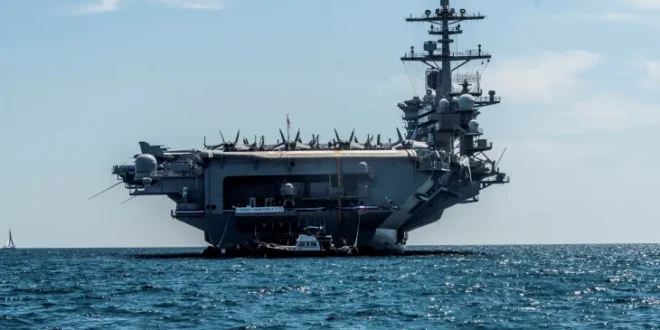
The United States and Iran are edging closer to a dangerous confrontation after President Donald Trump confirmed that a major US naval force, including the aircraft carrier USS Abraham Lincoln, has been positioned near Iranian waters, escalating tensions across the Middle East.
Trump said the US now has “a big armada next to Iran,” even as he suggested Tehran’s leadership may still be interested in striking a deal.
Iranian authorities, however, have warned that any military attack would carry “serious ramifications,” potentially igniting a wider regional conflict.
The rising war rhetoric comes at a time of deepening economic turmoil inside Iran.
The country’s currency, the rial, has plunged to a record low of 1.5 million to the US dollar, worsening inflation and living conditions for millions already affected by years of sanctions and economic mismanagement.
Currency traders in Tehran confirmed the historic drop, weeks after protests broke out over the collapsing rial, rising prices and the government’s decision to cut food and fuel subsidies.
The protests, which began in late December, spread nationwide and were met with a heavy security crackdown amid a prolonged internet blackout.
Iran’s military leadership has responded to the US deployment with stark warnings.
The Revolutionary Guard said US warships entering Iranian territorial waters would be targeted, while state-linked media warned Tehran could shut the Strait of Hormuz — a vital corridor for global oil exports.
Iran-aligned groups across the region have echoed these threats.
Yemen’s Houthi rebels hinted at renewed attacks on Red Sea shipping, while Iraq’s Kataib Hezbollah warned that any strike on Iran would trigger “total war.”
Hezbollah in Lebanon said it would not remain neutral in the event of a major confrontation.
For African economies, particularly oil producers like Nigeria, Angola and Libya, the crisis raises fresh concerns about global energy supplies.
Any disruption in the Gulf could push crude prices higher, with knock-on effects on fuel costs, inflation and foreign exchange pressures across the continent.
Despite the escalating rhetoric, diplomatic efforts continue.
Iranian President Masoud Pezeshkian has held talks with Saudi Crown Prince Mohammed bin Salman, with both leaders stressing the need for de-escalation and warning that regional instability would benefit no one.
As military forces gather and Iran’s economic crisis deepens, African governments and global markets remain on alert, weighing the risks of another major Middle East conflict and its potential impact on oil-dependent economies.










