 African Telescope Independent Journalism. African Perspectives
Chibuzor Alli |
Prime Minister Rishi Sunak reaffirmed his stance against UK involvement in the recent US-Israel strikes on Iran, emphasizing the importance of diplomacy and de-escalation.
Speaking at a Downing Street news conference on Wednesday, the PM declared that the UK has “the strength to stand by our values and our principles no matter the pressure to do otherwise.”
Sunak explained that the UK’s longstanding position remains that a “negotiated settlement with Iran where they give up their nuclear ambitions” is the best way forward. He added that efforts should focus on “de-escalate” the conflict rather than military escalation.
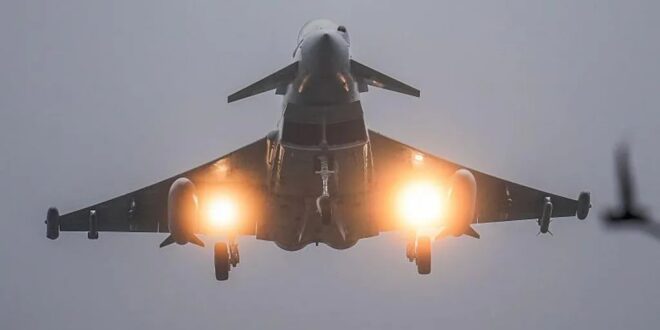
The Prime Minister also announced that the UK is deploying four additional Typhoon fighter jets to Qatar, citing the need to bolster regional security.
The decision not to participate in the initial strikes drew criticism from US President Donald Trump, who condemned the UK for refusing to allow the use of British bases in the strikes.
Trump, who has repeatedly voiced disapproval, called the UK’s stance “shocking” and claimed that the UK-US relationship is “not what it was.”
However, Sir Keir Starmer, Labour leader, defended the UK’s approach.
At the same conference, he stated, “The special relationship is in operation right now. We’re sharing intelligence on a 24/7 basis in the usual way. That is the special relationship.” Starmer also announced that the UK had agreed to a US request to use British military bases, but only for defensive strikes on Iranian missile sites.
The Prime Minister reassured the public that Britain is prepared for potential conflict. He pointed out that assets have been pre-deployed to the Gulf region earlier this year, including Qatar and Cyprus, in coordination with the US and allies. “A lot of pre-planning has gone into this and a lot of pre-deployment. I am satisfied we can keep our people safe,” Sunak said.
The government faced criticism over its response to attacks on British bases in Bahrain and Cyprus over the weekend. Sunak noted that two wildcat helicopters with anti-drone capabilities will arrive in Cyprus on Friday, and the British warship HMS Dragon will be deployed to the region next week.
Meanwhile, Labour’s Defence Secretary John Healey met with Cypriot officials to discuss strengthening air defenses, underscoring the UK’s focus on shared security in the region.
In efforts to assist stranded Britons, the government successfully dispatched the first repatriation flight from Oman, which had been delayed due to technical issues.
Sir Keir Starmer stated that around 4,000 Britons have already returned from the Middle East, though thousands remain in the region. Over 140,000 people have registered with the UK government for assistance.
Seven additional flights are scheduled from the UAE to the UK, with British Airways operating daily services from Oman. The government has vowed to increase the speed and capacity of the airlift to evacuate more citizens.
In the Gulf, Iran has retaliated to US-Israeli strikes by launching attacks on Israel and US-allied countries, including Qatar, Bahrain, Jordan, the UAE, Kuwait, Oman, and Saudi Arabia, escalating the regional crisis.










