 African Telescope Independent Journalism. African Perspectives
Global oil prices climbed sharply on Thursday as Iran dismissed reports of ongoing negotiations with the United States, further dimming hopes of deescalation in the intensifying US-Israel war.
Brent crude futures, the international benchmark, surged nearly two percent to cross $104 per barrel following Tehran’s firm denial of talks with President Donald Trump’s administration.
The latest spike comes after a brief dip in prices on Wednesday, when reports suggested that Washington had proposed a 15-point plan aimed at ending the conflict.
Iran’s Foreign Minister, Abbas Araghchi, pushed back against those claims, stating in a state media interview that Tehran was not engaged in any direct discussions with Washington.
“We have no intention of negotiating for now,” Araghchi said, signaling a hardening stance from the Iranian government.
Tensions escalated further after White House Press Secretary Karoline Leavitt issued a stern warning, declaring that Iran would be “hit harder” if it refused to accept military defeat.
The ongoing conflict has severely disrupted global energy markets, particularly due to Iran’s effective closure of the Strait of Hormuz, a vital route that carries about one-fifth of the world’s oil supply.
Attacks on energy infrastructure across the Middle East have also contributed to the surge, sending shockwaves through global markets.
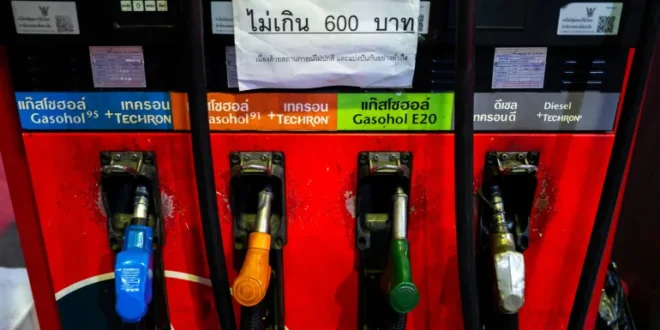
Oil prices have now risen by more than 40 percent since the US and Israel launched strikes on Iran on February 28, forcing several countries to introduce fuel rationing and other emergency energy measures.
Market analysts warn that prices could climb even higher unless shipping activities fully resume through the Strait of Hormuz, despite efforts by governments to stabilize supply using emergency reserves in coordination with the International Energy Agency.
Although Iran maintains that the waterway remains open to vessels not aligned with its adversaries, shipping traffic has dramatically declined since the conflict began.
Data from maritime intelligence firm Windward showed that only four vessels passed through the strait on Tuesday, a sharp drop from the usual average of about 120 daily transits before the war.
Meanwhile, Asian stock markets reacted negatively to the rising uncertainty, with Japan’s Nikkei 225, South Korea’s KOSPI, and Hong Kong’s Hang Seng Index all recording losses at the opening of trading on Thursday.
The deepening crisis continues to raise fears of prolonged instability in global energy supply, as diplomatic solutions appear increasingly out of reach.










