 African Telescope Independent Journalism. African Perspectives
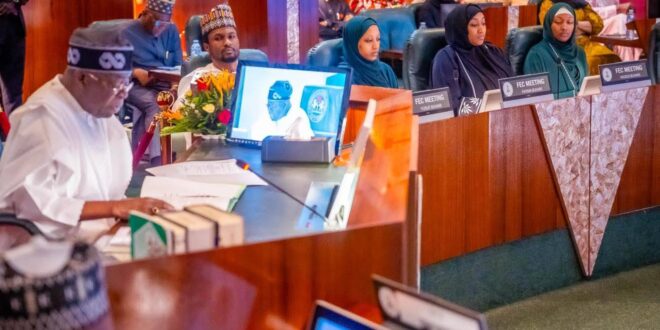
The National Economic Council of the Federal Republic of Nigeria has approved a 90-day economic action plan aimed at reducing the cost of living, improving food affordability and attracting investment across Nigeria.
The plan, proposed by the Federal Ministry of Finance, was endorsed on Thursday during the council’s 161st meeting, chaired virtually by Vice President Kashim Shettima.
The five priority areas of the plan are food affordability, tax harmonisation, completion of high-impact projects, resolution of investment bottlenecks and regulated household support.
The council also approved the establishment of a national dashboard to track projects across the country, with emphasis on transparency, accountability and reporting on the use of proceeds from fuel subsidy removal.
Speaking at the meeting, Shettima urged state governors and relevant government institutions to ensure that the benefits of President Bola Tinubu’s economic reforms translate into improved living conditions for Nigerians.
He said the success of economic policies should be measured by their impact on people’s daily lives, including access to affordable transportation, healthcare, employment opportunities and financial security.
“The first dividend of prosperity should be the confidence to plan a life. Our task is to make such confidence less dependent on fortune,” the Vice President said.
Shettima also called for greater cooperation between the Federal Government and states, saying their separate responsibilities should not hinder the delivery of essential services.
“Our separate mandates must not become competing excuses. Each governor carries knowledge that no federal document can supply,” he said.
On transportation, the Vice President said the National Compressed Natural Gas Bus Initiative should be assessed based on how much it reduces commuters’ expenses rather than the number of vehicles deployed.
He said public transport should be measured by affordability and access, noting that the cost of travelling to work or pursue a livelihood should not consume the livelihood itself.
The council also resolved to establish a joint financing framework between the Federal Government and state governments to accelerate the deployment of compressed natural gas and electric vehicles.
It directed relevant authorities to engage transport unions and operators to ensure that savings from the use of the vehicles are passed on to commuters through lower fares.
Meanwhile, the Minister of Health and Social Welfare, Prof Muhammad Ali Pate, briefed the council on the reported Ebola outbreak in the Federal Capital Territory and assured members that Nigeria had the institutional capacity to contain the situation.
Pate said the national response would focus on coordination, detection at points of entry, laboratory testing, provision of essential kits and personal protective equipment, and public communication.
He added that 21 state governments had updated their preparedness and response plans and urged the remaining 15 states to establish appropriate mechanisms.
The council also directed states to strengthen polio eradication efforts, particularly in communities where children were missed during immunisation campaigns and areas affected by insecurity.
It further acknowledged the potential of livestock development to create jobs, stimulate economic growth and improve livelihoods, resolving to strengthen cooperation between the Federal Government and states to advance the sector.










