 African Telescope Independent Journalism. African Perspectives
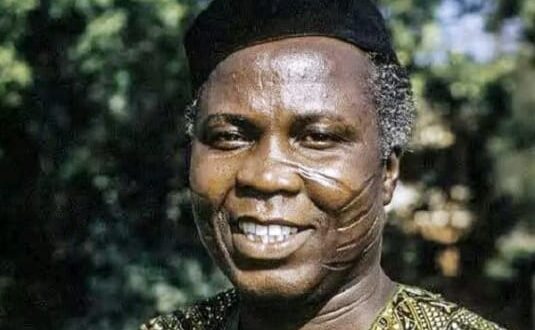
By Ogar Emmanuel
President Bola Tinubu has urged Nigerians to embrace the ideals of courage, unity and political cooperation exemplified by the late Chief Samuel Ladoke Akintola, warning against bitterness, division and politics of acrimony.
The President said Nigeria must learn from history, not to reopen old wounds, but to heal them and strengthen national cohesion.
“The memories of our past should unite us, not divide us. We must build bridges, not walls,” Tinubu said.
The President spoke through the Secretary to the Government of the Federation (SGF), Senator George Akume, at the 2026 Samuel Akintola Memorial Lecture and the 60th remembrance of the former Premier of Western Nigeria, held at the International Conference Centre, University of Ibadan.
Tinubu described the lecture, themed Unity in Diversity: Lessons from Chief Ladoke Akintola’s Legacy, as a fitting tribute to a nationalist whose life and sacrifice remain central to Nigeria’s history.
“Chief Akintola, like many leaders of his generation, paid the ultimate price so that Nigeria could attain its full potential,” he said.
Recalling the January 15, 1966 military coup, the President said the tragic events altered Nigeria’s path but failed to destroy its spirit.
“Nigeria endured then, and Nigeria will endure now—as one indivisible nation,” he said.
Acknowledging current socio-economic challenges, Tinubu assured Nigerians that his administration remains committed to people-centred reforms aimed at inclusive and sustainable prosperity.
“Our reforms are not designed to punish Nigerians but to secure a stable and prosperous future for all,” he said, urging citizens to exercise patience as policies begin to yield results.
Reflecting on Akintola’s life, Tinubu described him as a teacher, journalist, lawyer and astute politician, who rose from humble beginnings in Ogbomoso to become the first Premier of Western Nigeria.
He highlighted Akintola’s service as federal minister, Leader of the Opposition, and Aare Ona Kakanfo of Yorubaland, as well as his role in the establishment of key institutions such as University College Hospital, Ibadan, Nigeria Airways, and the University of Ife.
According to the President, Akintola’s greatest legacy was his belief in the politics of cooperation.
“He believed in consensus over conflict and fairness over exclusion,” Tinubu said.
He noted that while allegations of corruption were used to justify the 1966 coup, Akintola stood out as a leader who initiated and completed impactful development projects.
The President also paid tribute to other leaders killed during the coup, including Sir Ahmadu Bello, Sir Abubakar Tafawa Balewa, and Chief Festus Okotie-Eboh, warning that intolerance and disunity come at a heavy cost.
Describing Nigeria as a nation of diversity, Tinubu stressed that unity remains the country’s strongest asset.
“Our diversity must be our strength, not our weakness,” he said.
He cited the establishment of Regional Development Commissions across the six geopolitical zones as proof of his administration’s commitment to equitable development.
The President also highlighted investment in education through the Nigerian Education Loan Fund, revealing that over 600,000 students have benefited from interest-free loans nationwide.
“Education remains our most powerful weapon against poverty, insecurity and division,” he said.
Addressing the South-West, Tinubu assured the region of continued federal attention, noting that the South-West Development Commission is operational, with accelerated projects in power, roads, rail, agriculture and innovation.










