 African Telescope Independent Journalism. African Perspectives
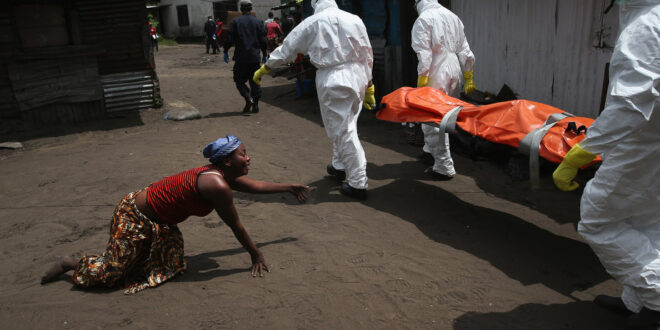
Kenya has recorded its second Ebola death, with seven patients still receiving treatment as authorities step up efforts to contain the country’s first outbreak of the disease.
The latest victim was a 65-year-old woman who was a close relative of Kenya’s first Ebola patient, the Ministry of Health said.
The woman had been placed under quarantine but developed symptoms on October 13 before she died.
Kenya’s first Ebola death occurred on October 5, when a man who had fallen ill in September died in Nairobi after receiving treatment at several hospitals in the Democratic Republic of Congo.
The man had travelled from the DR Congo to Kenya before his condition deteriorated.
According to the health ministry, all the confirmed cases remain within one cluster, with no evidence of community transmission.
Seven patients are currently being treated at two isolation centres. They include three relatives of the first victim, three health workers and a hospital cleaner.
The outbreak has also raised concerns in Nigeria after Health Minister Prof Ali Pate said the country’s only confirmed Ebola case appeared to be genetically related to a strain previously identified in Kenya.
Pate said there was no evidence that the Kenyan patient had travelled to Nigeria, although further testing was being conducted.
Health authorities are also investigating whether Nigeria’s first Ebola patient came into contact with Kenya’s first victim. Both are believed to have passed through Uganda’s Entebbe Airport earlier this month.
Uganda has meanwhile tightened its border health measures, with its Ministry of Health announcing that travellers who had been in the DR Congo would no longer be permitted to transit through the country.
Kenya has intensified screening of passengers arriving from the DR Congo and nine other countries considered high-risk: Uganda, Tanzania, Rwanda, Burundi, Angola, Zambia, Ethiopia, South Sudan and the Central African Republic.
Travellers from the listed countries are required to complete a digital health surveillance form before boarding their flights and present a QR code to port health officials upon arrival.
Authorities have also ordered enhanced screening of aircraft arriving from the affected countries as part of efforts to prevent imported cases.
The International Rescue Committee warned that Kenya remains exposed to new infections because of its proximity and links to the DR Congo, where more than 9,500 cases have been recorded.
The US has also warned its citizens against travelling to Kenya, while Uganda, Ethiopia and Somalia have heightened their surveillance measures.
Ebola is a rare but potentially fatal viral disease that can spread through contact with infected bodily fluids, including blood and vomit. Severe cases can cause vomiting, diarrhoea, organ failure and, in some patients, internal or external bleeding.
The outbreak involves the Bundibugyo species of Ebola, a relatively rare strain for which there is currently no approved vaccine or treatment, although clinical trials are ongoing.
Kenyan authorities have continued public awareness campaigns urging people to report suspected cases promptly and seek medical attention.










