 African Telescope Independent Journalism. African Perspectives
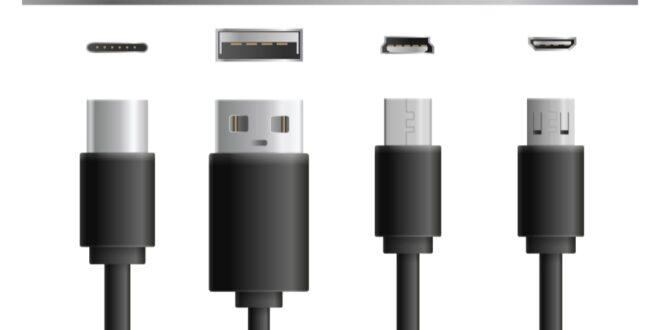
Kenya has introduced a sweeping directive banning the use of non-Type-C chargers, signalling a major shift in the country’s technology market.
The new rule, issued by the Communications Authority of Kenya, mandates that all mobile devices sold locally must support USB Type-C charging.
The policy forces phone manufacturers targeting the Kenyan market to abandon older charging systems and adopt a single, uniform standard.
Authorities say the move is designed to ensure devices meet strict safety and performance requirements.
“This directive reshapes how phones and other gadgets are designed and sold locally,” the regulator stated, highlighting a transition toward a unified charging system.
Under the new rules, any device using alternative charging ports will no longer meet compliance standards, effectively pushing them out of the market.
The decision aligns with similar measures in the European Union, where a common charger law has already made USB Type-C mandatory across devices.
The EU policy aims to reduce consumer inconvenience caused by incompatible chargers and address the growing issue of electronic waste.
In Kenya, officials say the benefits extend beyond convenience to safety and efficiency.
“These specifications aim to establish clear and comprehensive technical requirements for mobile cellular devices to ensure their safe, reliable, and efficient operation within Kenya’s telecommunications networks,” said David Mugonyi.
The Authority explained that the rules go beyond charging ports, covering power input, electromagnetic compatibility, environmental standards and overall device performance.
It warned that substandard or incompatible chargers can lead to overheating, electric shocks and even explosions.
Manufacturers are also required to eliminate hazardous substances such as lead, mercury and cadmium, while complying with radiation exposure limits.
Devices must also function across multiple network generations, including 2G, 3G, 4G and 5G, in line with global standards.
To ensure reliability, gadgets will be required to limit interference and maintain stable connections within Kenya’s telecommunications systems.
The directive further mandates compatibility with Kenya’s 240-volt power supply and the standard three-pin plug, or the inclusion of an adapter where necessary.
Battery performance has also been regulated, with phones expected to deliver at least eight hours of talk time and 24 hours of standby time.
Safety provisions include restricting access to live components, controlling heat levels and placing clear warnings on replaceable batteries.
The rules also emphasise accessibility, requiring support for assistive technologies such as screen readers, voice commands, braille compatibility, captions and vibration alerts.
For consumers, the shift means simpler charging, as one cable will work across multiple devices, reducing costs and clutter.
The regulator noted that while manufacturers must adjust, the transition is expected to be smooth since many global markets have already embraced USB Type-C.
Kenya’s move ultimately places the country within a broader global effort to standardise technology, improve safety and reduce environmental impact.










