 African Telescope Independent Journalism. African Perspectives
Chibuzor Alli |
The conflict in the Middle East has entered a new, more intense phase as fresh strikes targeted Iran and Lebanon on Friday, according to reports. Israel announced plans to escalate its military operations amid ongoing hostilities that have rapidly expanded over the past week, involving regional and global powers.
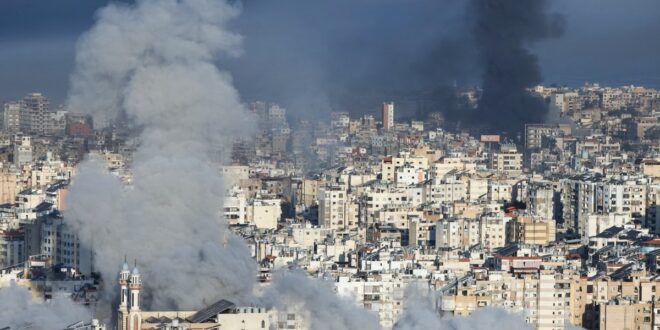
In Beirut’s southern suburbs, AFP footage showed scenes of devastation, with buildings mangled and vehicles burned after heavy Israeli bombings overnight. Thousands of residents fled the destruction, seeking safety amid the chaos. The war, now in its seventh day, has disrupted international energy markets, destabilized regional transport, and caused widespread turmoil in areas usually considered stable.
Early Friday, powerful explosions shook Tehran as Israel claimed to be striking “regime infrastructure” in Iran’s capital. Internet monitoring group Netblocks reported that Iran’s internet coverage has plummeted to about one percent, limiting information about the war’s impact on ordinary Iranians. In Tehran, streets are unusually empty of traffic, with residents indicating that security forces are maintaining a tight grip on the population.
A 30-year-old Tehran resident, speaking from Paris, told AFP that “the Islamic Revolutionary Guard Corps has closed almost every main street with armed personnel and heavy machine guns to frighten people.” The resident added, “The people are the real enemy in their eyes, not the Americans. Their extremists say first you have to deal with the enemy at home.”
The strikes on Tehran follow warnings from Israel and the United States that hostilities are intensifying. The conflict began Saturday with a barrage that killed Iran’s Supreme Leader, Ayatollah Ali Khamenei. Israel’s military chief, Lieutenant General Eyal Zamir, announced, “We are now moving to the next phase of the operation,” adding, “We have additional surprises ahead which I do not intend to disclose.” US Defense Secretary Pete Hegseth echoed this, saying, “firepower over Iran and over Tehran is about to surge dramatically.”
President Donald Trump indicated that deploying ground troops into Iran would be a “waste of time” at the moment, but suggested he would “have to be involved” in selecting Iran’s next leader. According to Iran’s health ministry, US and Israeli strikes have killed 926 people, though independent verification is unavailable. Iran has responded with missile and drone attacks against Israel and the Gulf region; at least 10 people have been killed in Israel, and six US military personnel have died since the conflict escalated.
Lebanon’s southern regions have also been embroiled in the fighting. Hezbollah launched missiles in support of Iran, prompting Israeli strikes on southern Lebanese towns and widespread destruction in the Beirut suburbs. AFP journalists on the ground described scenes of panic as residents fled en masse following an Israeli evacuation order.
One resident told AFP, “We fled from the suburbs, we were humiliated,” and added, “We’ll sleep on the road tonight and God alone knows what will happen to us.” Israeli military chief Zamir ordered troops to expand control in southern Lebanon, where the health ministry reported 123 deaths in strikes.
Iran has continued its attacks on Israel, firing missiles toward Tel Aviv and lighting up the skies over Netanya. The conflict has also spilled into the Gulf, with Qatar intercepting a drone attack on a US air base early Friday, and Saudi Arabia shooting down three drones east of Riyadh. Since the conflict began, at least 13 people—seven civilians—have been killed in Gulf countries, including an 11-year-old girl in Kuwait.
The fighting has extended beyond the Middle East, with reports of a US submarine torpedoing an Iranian frigate off Sri Lanka and Azerbaijan threatening retaliation after a drone strike on an airport. Countries are rushing to repatriate tourists caught in the fighting as air traffic has been severely restricted. The conflict has damaged the reputation of the Gulf as a luxury tourism hub, with Iranian missiles striking hotels and residential buildings.
The war has had a significant impact on global markets, with crude oil prices soaring approximately 20% in just one week. Shipping through the Strait of Hormuz has nearly halted, raising fears of broader economic consequences. Market analysts warn that unless the fighting ends soon, volatility will remain high, and markets could face further declines.
This ongoing escalation underscores the volatile and unpredictable nature of the region’s conflict as nations grapple with the expanding scope of hostilities.










