 African Telescope Independent Journalism. African Perspectives
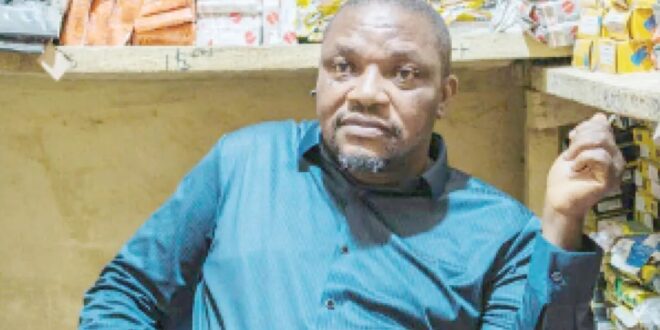
An investigation by The New York Times has shown how reports by a Nigerian civil society activist and graduate of the National Open University of Nigeria, Emeka Umeagbalasi, were used by United States lawmakers to justify American airstrikes on parts of Nigeria.
Umeagbalasi, a tool seller based in Onitsha, Anambra State, is the founder of the International Society for Civil Liberties and the Rule of Law, also known as Intersociety.
His publications, which allege large scale killings of Christians in Nigeria, were cited by US Senator Ted Cruz and Representatives Riley Moore and Chris Smith in arguments that Christians were being deliberately targeted across the country.
Relying on these claims, former US President Donald Trump ordered airstrikes on locations in Nigeria on Christmas Day, declaring that the killing of Christians by terrorists would not be tolerated.
Umeagbalasi, who studied security studies and peace and conflict resolution at NOUN, described the development as “miraculous” and warned that Nigeria could face a major crisis if the situation was not urgently addressed.
However, he admitted that much of his work was based on secondary sources such as media reports, Christian advocacy groups and online searches, and that he rarely verified figures through field investigations.
He also acknowledged that he often assumed the religion of victims based on the areas where attacks occurred.
Independent conflict researchers have challenged his figures, describing them as unreliable and methodologically weak.
Data from the Armed Conflict Location and Event Data project showed significantly lower civilian casualty numbers for the same periods in which Umeagbalasi claimed tens of thousands of Christian deaths.
Nigerian government officials and security analysts have also criticised his approach, arguing that framing the violence mainly as a religious war overlooks the broader insecurity that affects both Christians and Muslims across the country.
Despite the criticisms, the NOUN alumnus has continued to publish similar reports, insisting that Nigeria is approaching a dangerous turning point.
His work, though disputed, has now drawn international attention and, controversially, played a role in shaping foreign military action against targets in the country.










