 African Telescope Independent Journalism. African Perspectives
By African Telescope |
Guinea-Bissau will on Sunday hold presidential and legislative elections marked by deep political tension following the exclusion of a major opposition figure from the race.
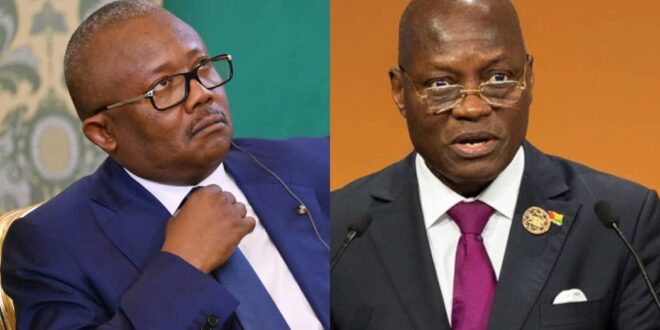
The incumbent, Umaro Sissoco Embaló, who has been in power since 2020, is seeking a second term and has spent weeks touring the country.
Embaló, popularly known as “General of the People”, is considered the frontrunner after the courts barred his main challenger, Domingos Simões Pereira of the PAIGC.
If re-elected, he will become the first president in three decades to secure a second term in the coup-prone nation of 2.2 million people.
Since independence from Portugal in 1974, Guinea-Bissau has recorded at least 10 coups or attempts. Another alleged plot was reportedly foiled three weeks ago, with Embaló insisting there have been several efforts to remove him from power since 2020.
Despite the setback of Pereira’s exclusion, the opposition remains crowded, with 11 candidates challenging the incumbent.
They include former president Jose Mario Vaz, who governed from 2014 to 2020, former defence minister Baciro Dja, and Fernando Dias, the candidate now backed by the PAIGC after its preferred flagbearer was disqualified.
The Supreme Court rejected Pereira’s candidature, saying his coalition submitted its documents late, a decision that sparked criticism and heightened political distrust.
A researcher with the French National Centre for Scientific Research, Vincent Foucher, told RFI that the merger of the PAIGC and PRS support bases could give Dias a strong platform, though the young politician lacks a national profile.
“So, between the PRS base and the PAIGC base, there will be a clear opponent to Sissoco. But it’s certain that Sissoco has taken many steps to strengthen his chances of being re-elected,” he said.
The coming election is also overshadowed by concerns over media freedom. Portuguese broadcasters RTP Africa and RDP Africa, as well as the news agency LUSA, were expelled in August, restricting independent coverage in the country.
Many within the opposition argue that Embaló never legitimately won the 2019 election and accuse him of exceeding his constitutional mandate after dissolving the opposition-led parliament last year.
He described the move as a necessary response to an attempted coup, a claim critics dispute.
Some voters, however, remain optimistic about change. “I am a PAIGC activist and I will vote for the ideal candidate, the one who will bring peace and success to Guinea-Bissau,” a resident, Judite Gome, said.
The key question is whether the PAIGC’s wide grassroots influence can be effectively transferred to Dias, especially as doubts linger over the neutrality of the Supreme Court and the National Electoral Commission, both restructured under Embaló.
Foucher warned that these controversies could undermine the credibility of the elections.
“The opposition will clearly have suspicions about the integrity of the election,” he said.
As Guinea-Bissau heads to the polls, the vote is seen not just as a test of Embaló’s popularity but as another critical chapter in the country’s long struggle with political instability.
Guinea-Bissau, a former Portuguese colony in West Africa with a population of 1.8 million people,1 has been embroiled in political and institutional crises since August 2015, following the run-off presidential elections of May 2014 that produced President José Mário Vaz.










