 African Telescope Independent Journalism. African Perspectives
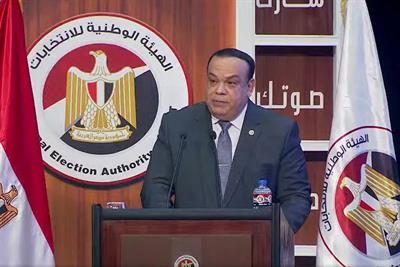
Egypt’s National Elections Authority (NEA) has declared the National Unified List — a coalition of 12 political parties — winner of the second phase of the 2025 parliamentary elections, sealing a sweeping but controversy-tinged victory.
Announcing the results in Cairo, NEA chairman Hazem Badawi said the coalition, which ran unopposed, surpassed the required five-percent threshold in both constituencies under the closed-list system.
“The National Unified List secured more than five percent of the votes in both constituencies,” Badawi said during the press briefing.
But the clean sweep was marred by irregularities that forced the partial cancellation of results in two polling subcommittees.
According to Badawi, the son of a candidate stormed Subcommittee 78 in Belqas, Dakahliya, attacking the polling materials and damaging the ballot box.
“He has been referred to the Public Prosecution and legal action is underway,” he confirmed.
Another breach occurred at Subcommittee 49 in Toukh, Qalyoubia, where officials discovered a ballot paper circulating outside the polling station. Prosecutors have been alerted to the incident.
Despite the disturbances, Badawi insisted the cancellations did not alter the overall outcome of the constituencies.
He further announced that run-off elections for individual seats will hold for Egyptians abroad on 15–16 December, while domestic voters will participate on 17–18 December. Final results are expected on 25 December.
The second phase of voting covered 13 governorates — including Cairo, Gharbia, parts of the Delta, and the Sinai region — with over 34 million eligible voters and 1,316 candidates competing for 141 individual seats.
In a sweeping corrective action, Badawi also revealed that the NEA will rerun elections in 30 constituencies across 10 governorates after courts annulled the earlier results over irregularities.
Rerun voting will take place abroad on 8–9 December, and inside Egypt on 10–11 December. Any required run-offs will continue into January 2026.
Describing the cancellations and reruns as essential to protecting electoral credibility, Badawi said:
“These decisions represent a correction of wrongful practices that some exploited to override the will of the voters.”
He added that the widespread annulment — the first of its kind in Egypt’s electoral history — underscores the NEA’s commitment to transparency.
Egypt’s current parliament, elected in 2020, expires in January 2026. By law, fresh elections must be completed within 60 days before that date. The incoming 596-member chamber will include elected lawmakers and 28 presidential appointees, with 25 percent of seats reserved for women.










