 African Telescope Independent Journalism. African Perspectives
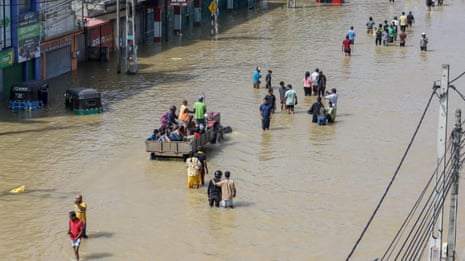
The devastating floods that ravaged Indonesia last week have now claimed over 500 lives, with rescue teams fighting against time to reach stranded victims.
The calamity was triggered by a rare cyclone forming over the Malacca Strait, hitting three provinces and displacing around 1.4 million people, according to official sources. Nearly 500 remain missing, and thousands more are injured in the catastrophe.
Indonesia’s tragedy is part of a larger regional crisis, as heavy rains and storms lash Thailand, Malaysia, and Sri Lanka, claiming lives across South and Southeast Asia.
In Indonesia, Aceh, North Sumatra, and West Sumatra are the worst-hit regions. Thousands remain cut off, with no access to vital supplies. Arini Amalia, a resident of Aceh’s Pidie Jaya, told the BBC the floodwaters were “like a tsunami.”
“According to my grandmother, this is the worst, the worst in her life,” she said. Aid workers are risking their lives on foot and motorcycles to reach affected areas, as many roads are impassable for larger vehicles. Photos show bridges washed away, roads buried under mud and debris, and logs piled high. Mariana, at West Sumatra’s Twin Bridges, watched as excavators cleared the mud-choked roads, desperately hoping to find her missing loved ones, including her 15-year-old son.
“Watching the excavators, seeing how thick the mud is… I keep thinking, what condition will my child be in when they find him?” she asked. “Will he still be intact? My mother, my brother-in-law…Looking at how it is here, maybe their faces won’t even be recognisable any more.”
Many survivors are starving, with some going days without food. Maysanti from Central Tapanuli, one of North Sumatra’s hardest-hit areas, told the BBC aid workers are struggling to reach her community.
“Everything is gone; our food supplies are running out. We can’t eat,” she said. “Even instant noodles are being fought over now. Our food is gone; we need food and rice.
Access to us is completely cut off.” She revealed she must walk kilometres to find internet and clean water. In Central Aceh, local authorities have provided Starlink devices, and thousands queued outside the regency office on Sunday night, hoping to contact loved ones or charge their phones.
“It’s been five days with no signal. We’ve been waiting since yesterday in case the network comes back. I plan to call my mother in Banda Aceh, but I still can’t reach her,” said Mar, a resident.
As rescue operations continue, anger is mounting over the government’s response. Critics say authorities were woefully unprepared, with bureaucratic red tape delaying aid delivery.
President Prabowo Subianto, visiting flood-hit North Sumatra, acknowledged some roads remain blocked but vowed, “we’re doing everything we can to overcome difficulties.”
“We face this disaster with resilience and solidarity. Our nation is strong right now, able to overcome this,” he added.
Across the region, over 1,100 lives have been lost to floods and landslides in just a week. Sri Lanka reports 355 deaths, Thailand at least 176. The calamity isn’t due to a single weather event but a complex mix of factors.
Weather news pointed to the north-east monsoon, which hits East and South Asia from November to March, bringing heavy rains to coastal areas as moisture from the ocean is hurled inland. Sri Lanka’s rainfall was intensified by Cyclonic Storm Ditwah, which moved slowly, dropping over half a metre of rain in some spots. The storm has weakened and moved north, bringing rain to south-eastern India, with drier weather forecast for Sri Lanka.
In the Malay Peninsula, Sumatra, and southern Thailand, Cyclonic Storm Senyar caused similar havoc, strengthening the monsoon with over a metre of rain in parts. An unusual storm formed near the equator—rare territory for cyclones. Vietnam, battered by weeks of monsoon rains enhanced by tropical cyclones, now faces more heavy downpours as remnants of Typhoon Koto drift toward its coast.
Climate experts warn that climate change may exacerbate these events. While it’s not expected to increase the number of storms, the ones that do form tend to be more intense, with heavier rains leading to catastrophic floods.










