 African Telescope Independent Journalism. African Perspectives
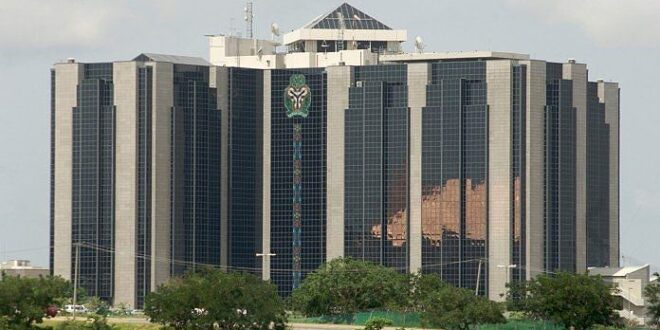
The Central Bank of Nigeria (CBN) has filed an appeal against the Federal High Court in Lagos, which recently voided its takeover of Union Bank of Nigeria Plc and ordered the reinstatement of the bank’s former board of directors.
Justice Chukwujekwu Aneke, in a judgment delivered on March 25, 2026, held that the apex bank acted beyond its statutory powers when it dissolved Union Bank’s board and management.
In response, the CBN, through a team of Senior Advocates of Nigeria led by Yusuf Ali (SAN), described the judgment as legally flawed and inconsistent with regulatory powers under Nigerian banking laws. Other members of the legal team include Kemi Pinheiro (SAN), Tunde Fagbohunlu (SAN), Uche Val Obi (SAN), and Chukwudi Enebeli (SAN).
The notice of appeal, filed on March 26, 2026, raised 11 grounds, urging the appellate court to set aside the judgment entirely.
“The learned trial judge erred in law when he held that the appellant acted ultra vires its statutory powers,” the CBN said in one of the grounds of appeal.
The apex bank maintained that its intervention in Union Bank was justified by the bank’s precarious financial condition at the time.
“Evidence before the trial court clearly showed that Union Bank was in severe financial distress, with a negative capital adequacy ratio, a capital shortfall exceeding N224bn, and high levels of non-performing loans,” the CBN argued.
“It was therefore imperative for the appellant, in the exercise of its statutory mandate, to act decisively to safeguard the stability of the banking system,” it added.
Citing the Central Bank of Nigeria Act and the Banks and Other Financial Institutions Act 2020 (BOFIA), the CBN insisted it acted within the law.
“Section 34 of BOFIA expressly empowers the Governor of the Central Bank to remove directors and officers of a bank in a critical condition, while Section 51 protects actions taken in good faith in the discharge of statutory duties,” the bank stated.
The CBN further faulted the trial court’s interpretation of these provisions, arguing it led to “a miscarriage of justice.”
“The lower court wrongly declared the appellant’s actions unlawful, unconstitutional, and ultra vires, and proceeded to nullify all acts carried out by the management appointed by the appellant without any legal basis,” it said.
In addition to the appeal, the CBN filed a motion seeking a stay of execution of the judgment pending the determination of the appeal. The apex bank urged the court to restrain the reinstated directors and other respondents from taking control of the bank or interfering in its operations.
“Unless this honourable court grants a stay, the respondents may take steps that could destabilise the governance structure and operations of Union Bank,” the CBN warned in an affidavit supporting the application.
It also asked the court to prevent the respondents from convening board meetings, altering governance structures, or engaging in media actions capable of undermining the bank’s stability.
“The preservation of the status quo is essential to protect the integrity of the banking system and ensure that the appeal is not rendered nugatory,” the CBN stated.
The respondents in the appeal include Titan Trust Bank Limited, Luxis International DMCC, Magna International DMCC, and several former directors of Union Bank, including Bayo Adeleke and Yetunde Oni, who had approached the Federal High Court as beneficiaries of Union Bank shares.
The CBN emphasised that the appeal raises significant legal questions regarding the scope of its regulatory authority.
“This appeal presents substantial and arguable issues of law touching on the powers of the Central Bank under BOFIA and the need to maintain financial system stability,” it said.
The appellate court is yet to fix a date for the hearing of the appeal and the accompanying application for stay of execution.










