 African Telescope Independent Journalism. African Perspectives
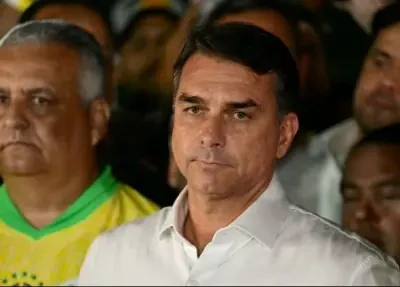
Flávio Bolsonaro’s reported departure comes amid passport revocation and a money-laundering investigation he denies
Flávio Bolsonaro, the defeated candidate in Brazil’s presidential election, has reportedly left the country for the United States amid a judicial investigation into alleged money laundering, as re-elected President Luiz Inácio Lula da Silva prepares to govern a deeply divided nation.
According to reports cited by Reuters and other media outlets, the 45-year-old senator departed Brazil on Tuesday, October 27, two days after losing the presidential run-off to Lula.
His departure came after Brazil’s Supreme Court reportedly ordered him to surrender his passports within 24 hours as part of an investigation into suspected money laundering. Bolsonaro denies the allegations.
Reports also indicated that his Brazilian and diplomatic passports had been revoked, while Washington announced that visas would be issued to him and his family.
Argentine migration authorities subsequently said Bolsonaro and his family had travelled from Argentina to Ecuador after crossing the land border, adding that they had valid travel documents and faced no legal impediment to the crossing.
The development reportedly surprised some members of Bolsonaro’s campaign team, who had expected him to lead the opposition following the election.
Lula, who turned 81 on October 27, criticised the departure, describing it as “shameful” and accusing the Bolsonaro family of maintaining close ties with the United States.
Lula stages electoral comeback
Lula secured 51.79 per cent of the votes in the October 25 run-off, defeating Bolsonaro, who polled 48.21 per cent, according to Brazil’s Superior Electoral Court.
The incumbent reportedly received 64.25 million votes, giving him a margin of more than 4.4 million votes over his rival.
The result marked a dramatic turnaround after Bolsonaro finished ahead in the first round on October 4, securing 47.03 per cent against Lula’s 45.16 per cent.
Lula’s victory prevented the return of the Bolsonaro political camp to the presidency and strengthened the left-wing leader’s bid to continue his social and environmental agenda.
Divided Congress poses challenge
Despite the victory, Lula faces the challenge of governing a country where conservative forces remain influential in Congress.
The election exposed deep divisions between supporters of Lula’s emphasis on social justice, Amazon protection and national sovereignty, and the conservative positions associated with the Bolsonaro camp.
Lula’s re-election will usher in a fourth presidential term, following his first two terms between 2003 and 2010 and his return to office in 2023.
His inauguration is scheduled for January 2027.
With the election result, Bolsonaro’s reported departure and the ongoing legal investigation adding to political uncertainty, Lula will need to build support beyond his political base to ease tensions and govern effectively.
Although Lula has secured another term, the contest over Brazil’s political future appears far from over.










