African Telescope Independent Journalism. African Perspectives
Chibuzor Alli
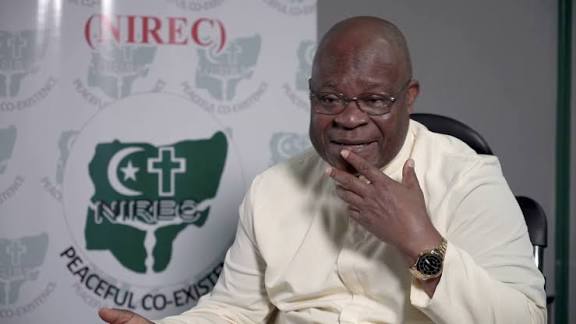
Prof. Cornelius Omonokhua, the Executive Secretary of the Nigeria Inter-Religious Council (NIREC), has emphasized that both Muslims and Christians suffer from what he describes as a form of genocide perpetrated by bandits and terrorists across Nigeria.
He made this statement during the conclusion of the “Promoting and Protecting Freedom of Religion or Belief” initiative, organized by Search for Common Ground with backing from the Netherlands’ Ministry of Foreign Affairs, held on Tuesday in Abuja.
Omonokhua pointed out that the widespread killings in Nigeria amount to a “war on humanity,” noting that criminal groups have targeted Nigerians regardless of their faith. “Just like recently, the word genocide has become problematic. The question is, what is genocide? And I can define genocide clearly from the Holy Quran, chapter 5, verse 32, that says, ‘If you kill one person, it’s as if you have killed the whole of humanity.’ To kill humanity, is that not genocide? That is genocide.”
He further stated, “So the question is very simple. Is there genocide in Nigeria? I would say yes. Because Christians have been massacred, Muslims have been massacred. There is war on humanity in Nigeria by the bandits and by the terrorists.”
According to him, the violence is mainly fueled by the desire for power and money rather than religious differences.
“What is the cause of all this? It’s not just religion. This has to do with power, and to get power, you have to manipulate religion,” he added.
Omonokhua urged Nigerians to resist falling into the trap of division that terrorists seek to sow between faith communities. He pointed out that NIREC’s efforts show there is no actual religious war in Nigeria.
“We should not fall into the strategy of the terrorists. Let us agree that there is fire on the mountain, and it is you and I that should quench it,” he said.
Representing the National Human Rights Commission (NHRC), Halilu Adamu, Director of the Civil and Political Rights Department, highlighted ongoing challenges such as stereotypes, religious intolerance, political manipulation of identity, mistrust among communities, and gaps within institutions.
However, he also saw these as opportunities for better engagement and evidence-based solutions.
Ojukwu, the NHRC Executive Chairman, emphasized the importance of understanding, dialogue, and tolerance in protecting religious freedom.
“The protection of religious freedom is closely tied to dignity, identity, and national peace,” he stated. He also noted that the initiative included the donation of 12 toll-free lines to improve access for Nigerians reporting issues related to religious rights.
Since U.S. President Donald Trump reclassified Nigeria as a “Country of Particular Concern” over alleged Christian persecution, the debate has intensified. While many Christian groups and leaders globally and locally support the designation, Nigeria’s government has rejected the move.