 African Telescope Independent Journalism. African Perspectives
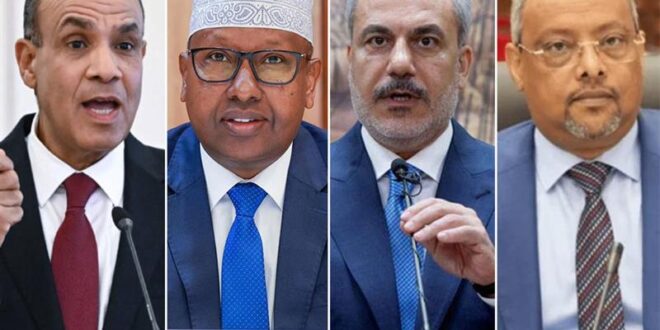
Egypt, Somalia, Turkey and Djibouti have jointly condemned Israel’s decision to recognise Somaliland as an independent state, warning that the move threatens Somalia’s sovereignty and could destabilise the Horn of Africa.
The four countries spoke after Egypt’s Foreign Minister, Badr Abdelatty, held urgent phone talks with his Somali, Turkish and Djiboutian counterparts on Friday as regional tensions escalated.
In a joint position, the ministers rejected Israel’s action, stressing that Somaliland remains an integral part of Somalia and that any unilateral recognition violates international law.
“The ministers reaffirmed their full support for Somalia’s unity, sovereignty and territorial integrity,” Egypt’s Foreign Ministry said, adding that any step undermining Somali statehood was “unacceptable and dangerous.”
They warned that recognising breakaway regions sets a troubling precedent across Africa, where separatist tensions remain a sensitive issue.
“Imposing parallel entities within sovereign states poses a direct threat to international peace and security and violates the UN Charter,” the ministers cautioned.
The countries also condemned attempts to “create new political realities” outside international legitimacy, insisting that respect for sovereignty remains a cornerstone of global stability.
Beyond Somalia, the talks touched on the wider Middle East crisis. The ministers reiterated their firm rejection of any plans to forcibly displace Palestinians from their land.
“Any proposal to push Palestinians beyond their territory is rejected in both form and substance by the international community,” the statement noted.
Israel on Friday became the first United Nations member state to formally recognise Somaliland, which declared independence from Somalia in 1991 but has never gained international recognition.
Israeli Prime Minister Benjamin Netanyahu and Somaliland President Abdirahman Mohamed Abdullahi signed a declaration establishing diplomatic ties, with Israel framing the move within the Abraham Accords.
However, Somalia, backed by the African Union, continues to view Somaliland as part of its sovereign territory, a stance strongly supported by Egypt and several African states wary of encouraging separatism on the continent.
For Nigeria and other African countries grappling with unity and national cohesion, analysts say the development raises fresh concerns about external actions that could inflame regional instability.
As one diplomat put it, “Africa cannot afford decisions that reopen old fault lines under new names.”










