 African Telescope Independent Journalism. African Perspectives
By African Telescope |
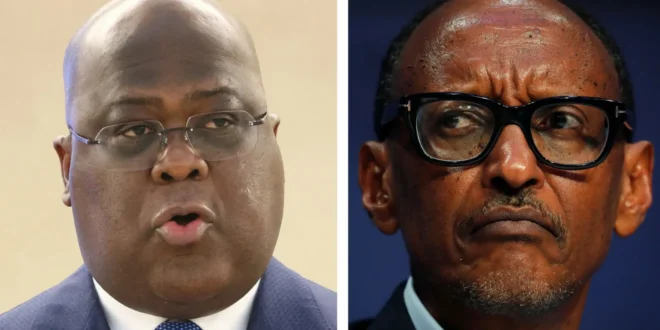
The presidents of the Democratic Republic of Congo and Rwanda are expected to sign a peace agreement in Washington, where US President Donald Trump is hosting a high-level summit aimed at ending decades of conflict in eastern DR Congo.
The ceremony comes amid renewed fighting between DR Congo’s army and the M23 rebels, whom Kinshasa accuses Rwanda of backing. The army said rebels launched fresh attacks in South Kivu in an attempt to undermine the peace process, while the M23 countered that government forces, supported by Burundian troops, had breached an existing ceasefire.
The conflict escalated sharply at the start of the year when the M23 captured large parts of eastern DR Congo, including Goma and Bukavu, displacing thousands and leaving many more dead. Both President Felix Tshisekedi and Rwandan President Paul Kagame have repeatedly traded accusations over who is fuelling the crisis.
In June, Trump brokered a preliminary accord signed by the two nations’ foreign ministers, describing it as a “glorious triumph.” Tshisekedi and Kagame are now set to formally endorse the deal, alongside other African and Arab leaders including those of Burundi and Qatar.
The M23 will not attend the Washington ceremony. It is holding separate talks with DR Congo under a Qatar-led mediation effort that runs parallel to the US initiative.
The Trump administration hopes the deal will not only ease tensions between the neighbours but also open the way for expanded US investments in DR Congo’s mineral-rich economy. The State Department estimates the country holds mineral reserves worth about $25trn, including cobalt, copper, lithium and tantalum, key materials for electronics, electric vehicles and defence industries.
Trump has openly linked the peace effort with US economic interests, saying the agreement would secure significant mineral rights for the United States.
Analysts, however, are cautious. Bram Verelst of the Institute for Security Studies said there is currently no functional ceasefire and that the M23 continues to consolidate control across the east. He warned that the ceremony alone is unlikely to halt fighting, though it may increase pressure on the two leaders to honour their commitments.
Rwanda maintains that its involvement in eastern DR Congo is limited to “defensive measures” against the FDLR militia, whose ranks include fighters implicated in the 1994 genocide. Kagame insists that the FDLR must be disarmed, while DR Congo demands a withdrawal of Rwandan troops. Both demands are central to the peace agreement to be signed.
Previous deals since the 1990s have collapsed after disagreements over the disarmament of the FDLR, raising concerns that history could repeat itself.
DR Congo has also insisted that no progress will be made on wider economic cooperation until Rwandan forces leave its territory. The US and Qatar are coordinating mediation efforts, with Washington seen as leaning toward DR Congo and Doha maintaining close ties with Rwanda.
Fresh clashes on Tuesday in South Kivu, about 75km from Uvira, underline the fragility of the situation. The M23 says the latest fighting shows the government is not committed to peace, while Kinshasa accuses the rebels of trying to derail the process altogether.
With tensions high, observers say the Washington signing will be a symbolic step but not a guarantee of stability in a region scarred by repeated failed agreements and persistent armed conflict.










