 African Telescope Independent Journalism. African Perspectives
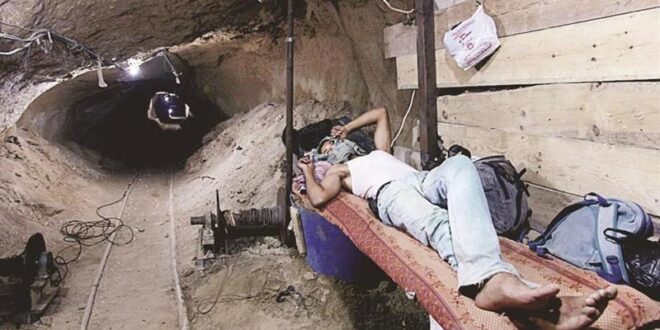
Israel’s military campaign in Gaza has hit a major stumbling block as the vast network of Hamas tunnels—popularly called the “Gaza Metro”—continues to outsmart Israeli forces nearly two months into the ceasefire.
The underground maze has become the centre of a tense standoff involving 100–200 Hamas operatives still trapped below ground. Israel, which controls eastern Gaza, has blocked all escape routes, while collaborators on the western side monitor other tunnel exits to prevent militants from surfacing.
In recent weeks, Israel has claimed it killed several Hamas commanders attempting to escape. It has also rejected mediator proposals for a safe surrender, insisting the trapped fighters are highly trained militants too dangerous to be released.
Egyptian military expert Wael Rabie says Israel’s refusal is strategic.
“Israel is not looking for an end to the crisis. It wants to eliminate these operatives because they are top militants with advanced skills,” he said.
Rabie added that the fighters are valuable not only for their rank but also for what they know.
“Their presence could help Israel trace the tunnel network, which has always been Israel’s toughest challenge,” he said.
Despite years of bombings, intense surveillance and U.S.-backed technology, Israel has failed to fully map or destroy the tunnels.
“Despite all its advanced technology and intelligence, Israel has been unable to crack the Gaza tunnels,” Rabie stressed.
Israel even created a special anti-tunnel unit in 2013 and tried flooding, concrete sealing and precision strikes—but gained little success.
Rabie says Hamas upgraded tunnel construction after Yahya Sinwar took over in 2011.
“These tunnels are three-level deep structures with multiple exits and ventilation systems,” he explained.
“This is why Israel cannot destroy them easily.”
Hamas first dug tunnels in the early 1990s to smuggle food and goods into Gaza under Israeli restrictions. As Israel improved its aerial detection, Hamas expanded the tunnels into a full military system used for:
transporting weapons
training fighters
launching attacks
hiding hostages
Rabie recalled:
“Israel’s worst nightmare came true when hostages taken on 7 October were moved into the tunnels.”
Israel claims Gaza holds 1,800 tunnels, but Palestinian sources dispute the figure. What is clear, Rabie said, is that Israel “does not have a complete map — not even close.”
He also dismissed Israel’s push to make the UN-backed International Stabilisation Force (ISF) responsible for tunnel destruction.
“Arab and Muslim countries will not sign up for combat operations. Their role is to secure the ceasefire, not fight Hamas,” he argued.
Rabie concluded that Israel’s tunnel challenge is far from over.
“It won’t be solved soon—and it won’t be easy,” he said.










