 African Telescope Independent Journalism. African Perspectives
By African Telescope |
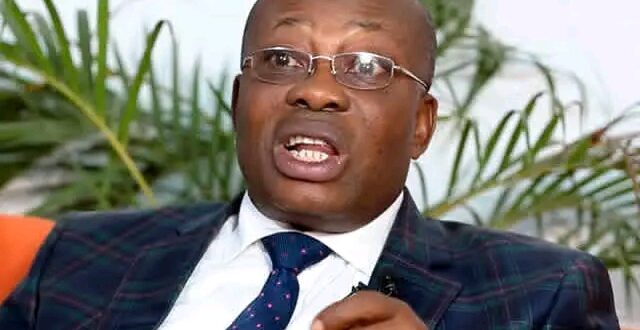
A Senior Advocate of Nigeria and policy analyst, Monday Ubani, has warned that Nigeria’s worsening insecurity will persist unless the Federal Government restores full financial and administrative autonomy to local governments.
Ubani, in a statement made available to African Telescope on Saturday, said all current approaches to tackling insecurity will remain ineffective because the tier of government constitutionally closest to the people has been deliberately weakened.
He noted that despite renewed violence, mass kidnappings, banditry and other forms of criminality across the country, Nigeria continues to ignore what he described as the “single most important pillar of lasting security” – a functional and empowered local government system.
He argued that even President Bola Tinubu’s recent declaration of a National Emergency on Insecurity, which includes recruiting more security personnel and withdrawing police protection from VIPs, still failed to acknowledge the need to strengthen grassroots governance.
“Security problems do not start in Abuja or state capitals. They begin in communities and rural areas, which fall squarely under local governments,” Ubani said.
According to him, the persistent insecurity crisis is a direct result of years of undermining local councils through political control, caretaker committees, and the controversial State Joint Local Government Account, which he said strips councils of funds and independence.
He added that many councils now operate as extensions of state governments, leaving communities without basic infrastructure, surveillance systems, functional roads for patrols, youth programmes, or support for traditional institutions.
“A powerless local government naturally produces ungoverned spaces where bandits thrive, where kidnappers move freely, and where intelligence gathering becomes almost impossible,” he said.
Ubani criticised successive administrations for focusing on military operations, counter-terrorism programmes and technology-driven interventions while ignoring the foundational governance failures that fuel insecurity.
He insisted that Nigeria cannot achieve meaningful security until local councils receive “full, unconditional and non-negotiable” financial autonomy.
“With true autonomy, councils can establish local security frameworks, respond quickly to intelligence, maintain critical roads, provide street lighting, engage youths and empower traditional authorities,” he said.
He described local governments as the “first line of defence” and warned that no national policing initiative can work effectively when communities are left impoverished and disconnected from governance.
Ubani also referenced the failed attempt by the Attorney-General of the Federation, Lateef Fagbemi, to secure constitutional clarity on local government autonomy at the Supreme Court, saying political interests sabotaged a reform critical to national stability.
“What kind of country weakens the very tier of government designed to protect its people during a period of rising threats?” he asked.
He urged President Tinubu to act decisively by releasing council funds directly and eliminating state interference.
“The path to a safer Nigeria is not hidden. It begins with strengthening the government closest to the people. Anything short of this is inadequate and dangerous,” Ubani said.










