African Telescope Independent Journalism. African Perspectives
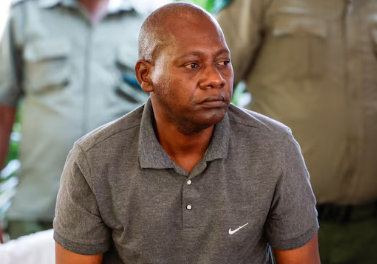
A Kenyan court has sentenced a self-proclaimed Christian cult leader, Paul Mackenzie, to 200 years in prison for the deaths of 190 children who were starved to death on his orders in one of the country’s deadliest cult-related mass killings.
Justice Diana Kavedza handed down the sentence on Friday, imposing 100 years for murder by starvation and another 100 years for direct homicide.
Mackenzie, who led an apocalyptic Christian group in a forest near Kenya’s Indian Ocean coast, was accused of directing his followers to starve themselves and their children to death to reach heaven before the end of the world.
The court also sentenced 28 accomplices to prison terms ranging from 10 to 160 years after finding them guilty at a trial last month.
Prosecutors said Mackenzie’s followers were threatened and beaten to ensure they obeyed his instructions. The victims’ emaciated bodies were later discovered in shallow graves and latrines in Shakahola Forest, with some reportedly buried alive.
Reading the judgment at a tent erected outside the court, Kavedza said Mackenzie had exploited his media presence to gain the trust of vulnerable followers, particularly children.
“Children observed as their siblings dropped dead after enduring hunger for days,” the judge said.
“Those who stole food or water were beaten, their hands tied and locked up in houses, turned into fasting bays to die.”
Mackenzie, who wore a grey polo shirt and black trousers during the proceedings, showed no reaction as the sentence was read. He had denied the murder charges, arguing that he did not force the victims to starve, but the court rejected his defence.
His lawyer, Lawrence Obonyo, who represented Mackenzie and most of the convicted accomplices, said he would appeal the judgment.
The case attracted international attention in April 2023 when police began uncovering bodies in Shakahola Forest, near the coastal town of Malindi.
Although the trial covered the deaths of 190 children and one adult, the Kenya National Commission on Human Rights said 448 bodies were eventually recovered from the forest.
Mackenzie is also facing a separate case over the alleged deaths of 52 people found at another location in a village about 30 kilometres away. He has pleaded not guilty to those charges. The suspected death toll across the two locations is about 500.
The tragedy has left families searching for answers about missing relatives.
Stephen Mwiti, 48, whose six children were among the victims, said his wife, who was also convicted as one of Mackenzie’s accomplices, had taken the children to Shakahola, where they were starved to death.
Questioning the decision to involve children in the fasting, Mwiti told Reuters ahead of the sentencing: “Even if the adults had agreed to fast, what about the children?”
Suleiman Zero, whose wife and six children remain missing, wept outside the court after the judgment.
“I am happy but where is my family?” he said. “The one thing that I request from the government is that they help find my family. If they are dead, then let me have the bodies to bury.”
Dan Mackenzie, one of the cult leader’s sons, said he fled the group in his early teens after losing faith in its promises of heaven. He said he lost friends and a younger brother to the group.
The conviction has renewed calls for stronger oversight of religious organisations in Kenya. Mackenzie had been known to authorities since 2017, when police searched his premises. His church in Malindi was shut down in 2019, after which he relocated to Shakahola Forest.
Ojiro Odhiambo, head of rapid response at the Kenya Human Rights Commission, described the conviction as an important step but said accountability should extend to officials and institutions that failed to respond to earlier warning signs.
“All these people have failed the people,” he said, referring to local administrators, police, intelligence officers and religious leaders.
Justice Kavedza also said Kenyan institutions had failed and called on parliament to take steps to prevent a recurrence.
In 2023, President William Ruto said he accepted responsibility for the government’s failure to prevent the deaths.