 African Telescope Independent Journalism. African Perspectives

From Nigeria to the United States and other parts of Africa, some Christian religious leaders have challenged conventional teachings on monogamy by marrying multiple wives, publicly defending polygamy or questioning whether the Bible prohibits the practice.
The debate has gained renewed attention following reports that an American pastor, Israel Ford, introduced his second wife to his congregation, arguing that the widely held Christian teaching that a man should have only one wife is “unbiblical”.
Ford, founder of LifeWorks Church in the Cleveland area of Ohio, shared a video of the announcement on Instagram on October 25.
During the church gathering, his first wife and fellow pastor, Lydia Ford, introduced Minister Shakayla Talley Ford to the congregation, which reportedly gave the trio a standing ovation.
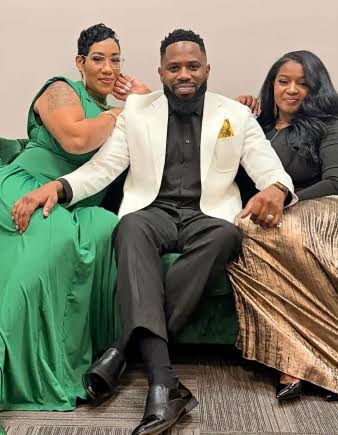
The development has reignited discussions about biblical interpretation, marriage, church traditions and whether Christian leaders can reconcile polygamy with their religious responsibilities.
Nigerian pastor defends marriage to three wives
In Nigeria, Prophet Joseph Apata, leader of Vineyard of Deliverance Ministry, popularly known as The Rock Church, in Ibeju-Lekki, Lagos State, has publicly defended his decision to marry three wives.
In interviews reported by Nigerian media, Apata said he believed he had received divine instructions to marry more than one woman.
Reports about his family also described the initial opposition of his first wife and her eventual acceptance of the arrangement.
His case has drawn attention to the relationship between personal religious convictions, claims of divine direction and the expectations placed on Christian marriage.
While some religious leaders consider monogamy fundamental to Christian family life, others argue that biblical accounts of patriarchs and kings who had multiple wives demonstrate that polygamy is not expressly prohibited throughout scripture.
Pastor marries third wife in Port Harcourt
Another Nigerian cleric who attracted attention over multiple marriages was Apostle Ernest Agortey, founder of Alabaster House Assembly in Port Harcourt, Rivers State.

Reports published by Pulse Nigeria in April 2017 said Agortey had married a third wife.
The report discussed his previous marriages and his reported explanation for continuing to seek a suitable partner.
The development generated public interest in the marital choices of religious leaders and the questions that arise when their family arrangements differ from the expectations of congregations that practise monogamy.
However, details surrounding the marriages and the pastor’s explanations require independent verification before being treated as established facts.
Kenyan cleric challenges missionary teachings on monogamy
In Kenya, Reverend Vincent Mulwa of Christ Pilgrim Restoration Centre publicly questioned Christian opposition to polygamy.
A report published in February 2018, citing an interview with Kenya’s Daily Nation, said Mulwa argued that African Christians had adopted European missionary perspectives on marriage and that polygamy should be reconsidered in the light of African traditions and biblical accounts.
His position reflects a broader debate in some African Christian communities over whether monogamy should be understood solely as a biblical requirement or also in the context of the historical and cultural influences that shaped church teachings across the continent.
The argument, however, remains contested among theologians and denominations, many of which maintain that Christian marriage should be monogamous.
Botswana pastor abandons plan to marry a third wife
In Botswana, Pastor Sekati Kemmonye attracted public attention in November 2023 after discussing plans to take a third wife while already married to two women.

According to a report by Legit.ng, Kemmonye subsequently announced that he would not proceed with the proposed marriage and apologised to women who had hoped to become his third wife.
Unlike cases in which religious leaders have proceeded with additional marriages, the development illustrated how public reaction and personal considerations can influence decisions about polygamous relationships.
The case also demonstrated that public discussions about polygamy among religious leaders do not always culminate in another marriage.
South African church and polygamous marriages
The debate extends beyond individual pastors to churches whose practices accommodate or tolerate polygamous unions.
The International Pentecost Holiness Church in South Africa has attracted international attention for large wedding ceremonies involving men marrying multiple women.
An Associated Press report documented mass wedding celebrations at which some men reportedly married additional wives, with some already having several spouses.
The ceremonies highlighted differences between religious communities in their understanding of marriage and the extent to which traditional practices influence religious institutions.
The church’s practices differ from those of many mainstream Christian denominations, which maintain monogamy as the standard for Christian marriage.
Nigerian evangelist cites Yoruba culture
Cultural considerations have also featured in discussions about multiple marriages among Nigerian religious leaders.
A nonagenarian evangelist interviewed by PUNCH defended having more than one wife as part of his Yoruba cultural background, arguing that the arrangement could work if the wives were treated fairly.
His position illustrates how some individuals draw on cultural traditions when explaining marital arrangements that differ from the expectations of many Christian churches.
Nevertheless, cultural acceptance of polygamy varies across communities, and the practice remains subject to different religious, social and legal interpretations.
What does the Bible say about polygamy?
The central disagreement surrounding these cases concerns how biblical passages should be interpreted.
Some proponents of polygamy point to figures in the Old Testament, including Abraham, Jacob, David and Solomon, who had multiple wives or concubines.
They argue that these accounts show that the Bible records polygamous marriages without establishing a universal prohibition against every such arrangement.
Those who defend monogamy, however, frequently cite the creation account in Genesis, in which a man is described as being united with his wife, and Jesus Christ’s reference to that passage in discussions about marriage and divorce.
They also point to passages in the New Testament that describe marriage in terms of one husband and one wife, including qualifications for church leaders in 1 Timothy 3:2 and Titus 1:6.
These passages have been interpreted differently by Christian traditions. Many denominations teach that monogamy is the Christian standard, while other religious communities distinguish between biblical descriptions of polygamy and whether the practice is explicitly prohibited.
Consequently, the claim that monogamy is “unbiblical”, as attributed to Ford, represents a contested theological position rather than a universally accepted Christian conclusion.
The implications for Christian leadership
The growing public attention surrounding pastors with multiple wives raises questions about church discipline, leadership standards, family welfare and the relationship between private choices and public religious responsibilities.
For some congregations, a pastor’s marital arrangement is closely connected to the moral example expected of a religious leader. Others may give greater weight to the individual’s interpretation of scripture, cultural background or personal convictions.
The experiences of the wives and children involved are also important to the discussion, particularly regarding consent, financial responsibilities, emotional wellbeing and the equitable treatment of family members.
Legal questions can differ from religious ones. The recognition of polygamous marriages depends on the laws of the country concerned, and a religious ceremony does not necessarily establish that every marriage is legally valid.
Ultimately, the cases from the United States, Nigeria, Kenya, Botswana and South Africa demonstrate that polygamy remains a subject of debate within parts of the Christian world.
While some religious leaders defend multiple marriages through biblical interpretation or cultural arguments, many Christian denominations continue to uphold monogamy as the appropriate model for Christian marriage.
The controversy is therefore not simply about how many wives a pastor may have. It also concerns how religious leaders interpret scripture, how churches define their standards and how those decisions affect the families and congregations involved.










