 African Telescope Independent Journalism. African Perspectives
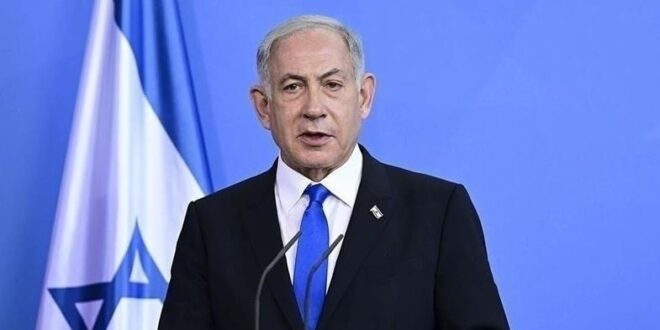
Israeli Prime Minister Benjamin Netanyahu faces an uncertain political future after a closely contested election left his right-wing bloc short of a parliamentary majority, raising the prospect of weeks of negotiations to form a new government.
With almost all votes counted after Tuesday’s election, Netanyahu’s bloc appeared to have a narrow lead over the opposition camp led by former military chief Gadi Eisenkot. However, neither side secured enough support to form a government independently.
The deadlock could prolong political uncertainty, although it may temporarily favour Netanyahu, who would remain caretaker prime minister while negotiations continue.
The election recorded voter turnout not seen in decades and was widely viewed as a referendum on Netanyahu, who has governed Israel intermittently for more than 19 years.
Arab parties, which made unprecedented gains, could emerge as kingmakers and help the opposition unseat Netanyahu if it agrees to work with them.
However, Netanyahu, who repeatedly attacked Arab parties during his campaign, accused them of stealing the election and demanded an investigation into allegations of foreign funding that remain unproven.
President Isaac Herzog, who is responsible for selecting a candidate to form the next government, has urged political leaders to avoid another election, raising the possibility of a national unity government.
In the final hours of voting, Netanyahu made an urgent appeal to his supporters to turn out, warning against leaving the outcome in the hands of left-wing and Arab parties.
“So no barbecues, don’t go to the beach; go to the polling station and vote Likud,” he told supporters at a rally.
Netanyahu’s longstanding reputation as a security-focused leader was badly damaged by Hamas’s October 7, 2023 attack on Israel, with Eisenkot capitalising on public anger over the security failures preceding the assault.
Nevertheless, Netanyahu campaigned on his military operations against Hamas in Gaza, Hezbollah in Lebanon and Iran, while highlighting an endorsement from United States President Donald Trump.
The 77-year-old leader also faces a long-running corruption trial, an international arrest warrant over alleged war crimes in Gaza and a regional conflict that has continued for more than three years.
Netanyahu, who first became prime minister in 1996, has built a reputation as one of Israel’s most enduring political figures. He led the country from 1996 to 1999, returned to office in 2009 and remained in power until 2021, before returning in late 2022.
His opposition to Palestinian statehood and support for expanding Israeli settlements in the occupied West Bank have also remained defining features of his political agenda. The settlements are considered illegal under international law.
Following the October 2023 attack, Netanyahu increasingly framed the conflict as a broader struggle to reshape the Middle East and weaken Iran’s regional influence.
While supporters credit him with demonstrating military resolve and confronting Tehran directly, critics argue that his policies have drawn Israel into prolonged conflicts and increased its international isolation.
The possibility of renewed conflict with Iran has further intensified calls for a unity government with Eisenkot, who has previously declared Netanyahu unfit to remain in office.
Netanyahu’s immediate challenge is to secure enough political support to form a government and prevent the election deadlock from ending his long political dominance.
AFP










