 African Telescope Independent Journalism. African Perspectives
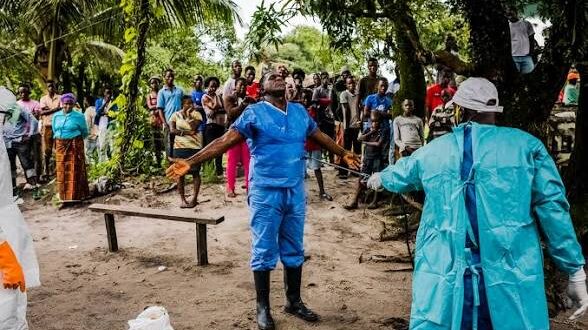
Africa is facing renewed concern over Ebola as the latest outbreak of the Bundibugyo virus spreads beyond its epicentre in the Democratic Republic of the Congo, with Kenya and Nigeria reporting imported cases and Uganda having recently completed its response to imported infections.
Nigeria confirmed its first imported case of Ebola Bundibugyo virus disease on October 20, 2026, making it the fifth country to detect the virus since the outbreak was declared in the Democratic Republic of the Congo on May 15.
The patient, a woman who had recently travelled to Nigeria from Uganda, was isolated in Abuja after testing positive, while 44 contacts had been identified and placed under monitoring as of the WHO’s latest report.
The development has extended the geographical reach of the current outbreak to West Africa and renewed attention on the continent’s history with Ebola.
DRC remains the epicentre
The Democratic Republic of the Congo remains at the centre of the 2026 outbreak.
WHO reported that, as of October 18, the DRC had recorded 9,552 confirmed cases and 4,602 confirmed deaths in the current outbreak. The figures give a confirmed-case fatality rate of about 48 per cent.
The outbreak is caused by Bundibugyo virus, one of the viruses in the Ebola group.
The current epidemic has spread across several provinces in eastern and other parts of the DRC, while cross-border movement has contributed to imported infections elsewhere.
The scale and speed of the current outbreak have raised particular concern among African health authorities.
The Africa CDC has called for strengthened cross-border surveillance, rapid detection, contact tracing and protection of health workers as countries seek to prevent further spread.
Kenya reports imported cases
Kenya became the first country outside the DRC to report an imported case linked to the current outbreak.
WHO said the patient travelled from the DRC through Uganda before arriving in Nairobi on October 3. The patient was isolated and tested positive for Bundibugyo virus on October 5, but later died.
Kenya subsequently reported additional infections among people who had close contact with the initial patient.
WHO said the country had reported nine cases linked to the imported infection.
The US Centers for Disease Control and Prevention said all the Kenyan cases were in Nairobi and that Kenya had not reported community transmission as of October 20.
Uganda contained its outbreak
Uganda was also affected by the current Bundibugyo outbreak.
The country recorded 20 confirmed cases during its 2026 outbreak, including cases imported from the DRC and locally acquired infections among contacts and health workers.
Uganda subsequently completed the required 42-day monitoring period without detecting further transmission and declared the outbreak over in August. WHO said 18 people recovered and two died during the outbreak, while more than 800 contacts were identified and monitored.
However, Uganda’s role in the current outbreak illustrates the difficulty of controlling Ebola in a region characterised by frequent cross-border movement, trade and travel.
Nigeria’s new case brings Ebola to West Africa again
Nigeria’s latest case is particularly significant because it represents the current outbreak’s first confirmed spread into West Africa.
WHO described the Nigerian infection as an imported case. The patient developed symptoms on October 7, four days after arriving in Nigeria, and sought treatment at a private health facility in Abuja on October 11. Laboratory testing confirmed Bundibugyo virus on October 20.
The Nigeria Centre for Disease Control and Prevention activated its incident management system, while health authorities began contact tracing and infection-control measures at the facility where the patient was treated.
Nigeria has previous experience with Ebola. In 2014, an infected Liberian traveller arrived in Lagos, triggering an outbreak that eventually produced 20 cases and eight deaths before the country was declared Ebola-free on October 20, 2014.
African countries that have previously recorded Ebola
Ebola is not new to Africa. According to the WHO Regional Office for Africa, outbreaks have occurred in the Democratic Republic of the Congo, Gabon, Guinea, Liberia, the Republic of the Congo, Sierra Leone, Sudan and Uganda.
Imported cases have also been recorded in Mali, Nigeria, Senegal and South Africa.
The history can therefore be broadly divided into countries that have experienced outbreaks and those that have primarily dealt with imported infections.
Countries where WHO records Ebola outbreaks include:
- Democratic Republic of the Congo
- Gabon
- Guinea
- Liberia
- Republic of the Congo
- Sierra Leone
- Sudan
- Uganda
Countries that have recorded imported Ebola cases include:
- Mali
- Nigeria
- Senegal
- South Africa
The distinction is important because the presence of a confirmed case does not necessarily mean that a country experienced a sustained local outbreak.
The West African Ebola crisis
Guinea, Liberia and Sierra Leone were at the centre of the devastating 2014–2016 West African Ebola epidemic.
The outbreak began in Guinea before spreading into Liberia and Sierra Leone. According to the Africa CDC, the epidemic recorded 28,610 confirmed and probable cases and 11,308 deaths.
The epidemic also resulted in imported cases in Nigeria, Senegal and Mali.
Nigeria recorded 20 cases and eight deaths. Senegal recorded one case without a death, while Mali experienced imported infections that were subsequently contained.
The outbreak exposed major weaknesses in health surveillance, infection prevention, emergency response and cross-border coordination across parts of West Africa. It also demonstrated how quickly an infectious disease can move through international travel networks.
Other countries with Ebola history
Gabon has experienced Ebola outbreaks, as has the Republic of the Congo. The DRC has experienced repeated outbreaks and remains the country with the longest and most extensive history of Ebola transmission.
South Sudan also has an important place in Ebola’s history. The first recognised Ebola outbreaks occurred in 1976 in what are now the DRC and South Sudan, according to the US CDC.
South Africa also recorded Ebola infections during an earlier outbreak. The CDC’s historical record includes two cases in South Africa in 1996, one of which was fatal.
Côte d’Ivoire is another African country with a documented Ebola-related history. In 1994, one person was infected with Taï Forest virus, a rarer virus in the Ebola group.
Côte d’Ivoire was also considered a high-risk country during the 2014–2016 West African epidemic because of its proximity to affected countries, although the country did not experience the large-scale epidemic seen in Guinea, Liberia and Sierra Leone.
A continent-wide preparedness challenge
The latest outbreak has once again demonstrated that Ebola does not respect national borders.
The DRC remains the main centre of transmission, but infections have been detected in countries connected through travel and population movement.
WHO’s latest situation data list the DRC, Uganda, Kenya and Nigeria among African countries affected by the current outbreak, while France has also recorded an imported case.
WHO is urging African countries to maintain strong surveillance, laboratory capacity, rapid-response teams, infection-prevention measures and monitoring at points of entry.
The agency has also advised against blanket travel or trade restrictions, instead recommending proportionate public-health measures designed to detect infections quickly and prevent onward transmission.
The current situation therefore involves two overlapping stories: a large outbreak still concentrated in the DRC and a growing network of countries preparing to prevent imported infections from becoming local outbreaks.
For countries such as Nigeria, which successfully contained the 2014 importation, the immediate challenge is to detect contacts quickly, isolate suspected cases, protect health workers and prevent community transmission.
For countries with previous Ebola experience, the renewed outbreak is also a test of whether lessons learned from the devastating West African epidemic have translated into stronger continental preparedness.










