 African Telescope Independent Journalism. African Perspectives
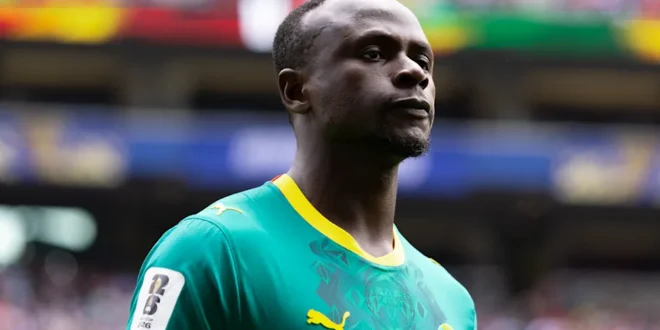
End of an era: How Sadio Mané transformed Senegal before retiring from international football
When Sadio Mané pulled on the green, yellow and red jersey of Senegal for the final time, it was more than the retirement of a footballer.
It marked the end of an era for a player who redefined the country’s football history and inspired a generation of Africans to dream beyond borders.
Just days after Senegal’s painful 3-2 Round of 16 defeat to Belgium at the 2026 FIFA World Cup, the 34-year-old captain announced he was retiring from international football, closing the curtain on a distinguished 14-year career.
The announcement, published by Senegalese newspaper Le Quotidien, brought an emotional end to a journey that saw Mané evolve from a promising youngster into one of Africa’s greatest football icons.
With 130 appearances for the Lions of Teranga, Mané leaves as one of the most decorated players in Senegal’s history. But statistics alone cannot define his legacy.
From village dream to global superstar
Born in Bambali, a small village in southern Senegal, Mané’s rise remains one of African football’s most inspiring stories.
He first caught the attention of European scouts after moving to France to join FC Metz before building an impressive career with Red Bull Salzburg, Southampton, Liverpool, Bayern Munich and later Al Nassr.
Wherever he played, Mané became known for his blistering pace, relentless work ethic and ability to deliver in decisive moments.
Yet, despite winning trophies across Europe, representing Senegal remained his greatest source of pride.
The man who ended Senegal’s long wait
For decades, Senegal produced talented footballers but struggled to conquer Africa.
That changed in 2022 when Mané captained the nation to its first-ever Africa Cup of Nations title after defeating Egypt on penalties.
His winning spot-kick instantly became one of the most iconic moments in African football history.
He followed it by helping Senegal qualify for the FIFA World Cup and continued to serve as the face of the national team through several major tournaments.
More than goals
Mané’s influence stretched far beyond football.
Known for his humility and philanthropy, he invested heavily in his hometown, funding schools, hospitals and community projects that transformed lives in Bambali.
His actions earned admiration across Africa, where many viewed him as a symbol of success rooted in service.
For young Africans, Mané became proof that global fame and local impact could go hand in hand.
A painful farewell
His final tournament ended in disappointment as Senegal bowed out of the World Cup after a thrilling 3-2 defeat to Belgium.
Days later, Mané confirmed that his international journey had come to an end.
“Know that I sacrificed everything for this flag. I gave the very best of myself and I always fought fiercely for our homeland,” he said.
The statement reflected the commitment that defined his years in Senegal’s colours.
What comes next?
Although Mané will continue his club career, Senegal now faces the difficult task of replacing a player who embodied its golden generation.
The responsibility will shift to younger stars to preserve the standards he helped establish.
Replacing his goals may be possible over time. Replacing his leadership, influence and connection with supporters will be far more difficult.
As African football continues to evolve, Sadio Mané’s name will remain woven into its history—not only as one of the continent’s finest footballers, but as a leader who changed the story of Senegalese football forever.
For millions of fans across Africa, Mané’s retirement is not simply the end of a career. It is the closing chapter of a legacy that will continue to inspire long after the final whistle.










