 African Telescope Independent Journalism. African Perspectives
By African Telescope |
Burkina Faso’s military government has severed diplomatic ties with France, accusing its former colonial ruler of supporting subversive networks and terrorists operating in the West African nation and the wider Sahel region.
The announcement, made on Friday in a statement broadcast on national television, marks a dramatic deterioration in relations between the two countries and underscores the growing anti-French sentiment sweeping parts of Francophone Africa.
“The government of Burkina Faso hereby informs the national and international community that it has decided to sever diplomatic relations with France with effect from today, June 26, 2026,” the junta said.
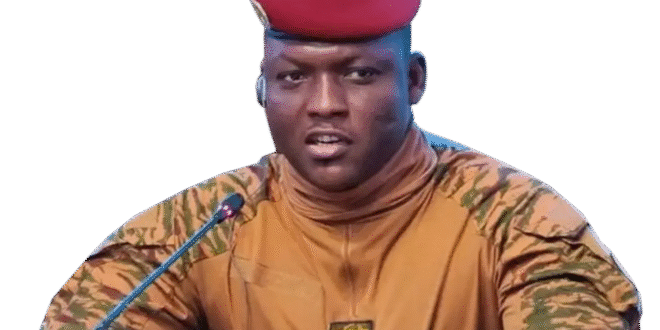
Led by Captain Ibrahim Traoré, who seized power in a September 2022 coup, Burkina Faso’s military authorities accused France of pursuing “neo-colonial ambitions” through alleged support for networks seeking to destabilise the country.
According to the junta, France has been actively supporting “subversive networks and the terrorists who are plunging our country and the Sahel into mourning.”
However, the government clarified that the diplomatic break applies only to official state relations and does not affect the long-standing cultural, historical and social ties between the peoples of both countries.
“This decision concerns exclusively the institutional framework of relations between the two states at the diplomatic level,” the statement said, adding that it “in no way calls into question the historical, human, cultural and social ties that unite the Burkinabe and French peoples.”
France swiftly rejected the allegations, describing Burkina Faso’s move as “hostile and baseless.”
The French government said the decision reflected “the troubling drift of the Burkinabe authorities” and disclosed that reciprocal diplomatic measures were under consideration.
Relations between Paris and Ouagadougou have steadily deteriorated since the military junta took power nearly four years ago, with Burkina Faso increasingly distancing itself from Western allies while strengthening ties with Russia and other non-Western partners.
Like neighbouring Mali and Niger, Burkina Faso has witnessed persistent attacks by jihadist groups linked to Al-Qaeda and the Islamic State, despite repeated military interventions and political changes.
The latest diplomatic rupture comes amid a broader shift across parts of West and Central Africa, where military-led governments have increasingly questioned France’s historical influence and sought new security and economic partnerships.
For decades after independence, France maintained significant political, military and economic influence across many of its former African colonies under a policy widely known as “Françafrique.”
In recent years, however, Paris has pledged to move away from that approach, promising a more equal partnership with African nations.
Despite those assurances, anti-French sentiment has continued to rise in several countries, fuelled by perceptions of continued foreign interference and dissatisfaction over prolonged insecurity in the Sahel.
The diplomatic split with Burkina Faso represents another setback for France’s influence in the region and further reshapes the geopolitical landscape as Russia and China continue to expand their presence across Africa.
.










