 African Telescope Independent Journalism. African Perspectives
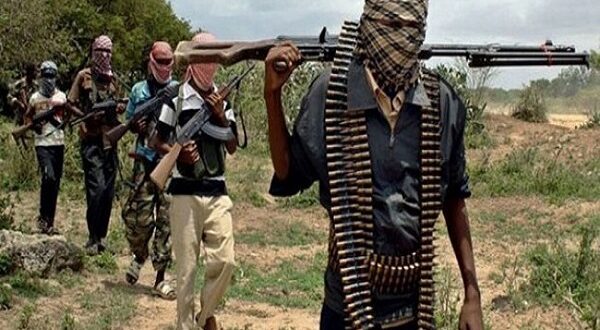
Fear and uncertainty have gripped families across Nigeria as more than 1,000 abducted citizens, mostly women and children, remain missing without trace after coordinated attacks in the first quarter of 2026.
According to a report by Punch Newspaper, from Kwara to Borno, Niger, Southern Kaduna and Zamfara states, relatives of the victims say the silence from kidnappers has become more painful than ransom demands, as many abductors have stopped calling, leaving families without proof of life or any clue about the fate of their loved ones.
Investigations showed that unlike previous kidnapping cases where abductors quickly established contact for ransom negotiations, many families now face complete silence.
In Woro community, Kaiama Local Government Area of Kwara State, the abduction of 176 residents in early February remains one of the largest mass kidnappings recorded in recent times.
More than 50 days after the incident, families said they had yet to hear from the abductors, although the victims, mainly women and children, were paraded in a five-minute, 41-second viral video.
Speaking on the painful silence, Abubakar Umar, a relative of several victims, said the uncertainty had become unbearable.
“We are not sleeping. Every day, we wake up with fear. At least if they call, we will know they are alive. But now, nothing. No calls, no messages, nothing. It is as if they vanished,” he said.
He added, “There are pregnant women there. There are children. Even strong men cannot survive a long time in the bush without food, water or medicine. What about them? Sometimes, we fear the worst but we cannot even confirm it.”
Another resident, Ajike Ajiboye, who has two relatives among the abducted, described the silence as emotional torture.
“We now pray for the kidnappers to call us. Imagine that. We are begging God that criminals should contact us. Because at least that will give us hope that our people are alive,” she said.
Ajiboye added, “This kind of waiting is worse than mourning.
When someone dies, you cry and bury them. But here, you don’t know whether to cry or keep hoping.”
A community leader, Shehu Abubakar, said the fear was greater for pregnant women, children and the elderly trapped in the forest.
“If they are in the bush without food or medicine, survival becomes very difficult. Our hearts are heavy every day. We don’t know whether our people are alive or dead. This uncertainty is killing us slowly,” he lamented.
In contrast, abductors in Omugo community reportedly demanded N500m for the release of eight church members.
President of the Omugo Development Union, Thompson Oladimeji, described the situation as devastating.
“Our hearts are heavy. Families are in anguish, the community is traumatised, and fear now defines our daily lives,” he said.
He urged the Federal and Kwara State governments, as well as security agencies, to strengthen rescue operations.
“We need a clear and sustainable plan to prevent a recurrence of such incidents in Omugo and neighbouring communities,” he added.
Families in Woro also accused the government of abandoning them.
“The government is behaving as if it cannot see what we are going through; we feel abandoned,” Ajiboye lamented.
A coalition of 31 civil society organisations also condemned the prolonged captivity of the Woro victims, describing it as a serious failure of the state.
The group said, “A situation where poorly fed and barely clothed children are exposed to harsh weather conditions is grossly condemnable.”
In Borno State, more than 300 residents abducted from Ngoshe in Gwoza Local Government Area during a March 4 terrorist attack remain unaccounted for.
Although a few women have returned, many children and others are still missing.
A resident identified simply as Yahaya said the returnees came back without phones and without clear explanations.
“Some women came back empty-handed. No phones, no explanation, nothing. Others are still there. We don’t know who is alive, who is dead,” he said.
Another relative added quietly, “We have no information. No calls, no contact. We only pray. That is all we can do now; pray and wait.”
In Niger State, some captives have reportedly spent more than one year in kidnappers’ dens, with some families paying part ransom without securing release.
A council worker in Shiroro LGA, Mustapha, said terrorists abducted more than 40 people during repeated Easter attacks.
“It is either the security agents do not exist or they have surrendered to the terrorists’ superior firepower,” he said.
A family member of former Niger SUBEB Chairman, Mohammed Niworu, who was abducted in September 2025, said the government had abandoned them.
“We don’t even know whether he is still alive or dead. If he is dead, at least we deserve to see his corpse, but if he is still alive, the government should come to our aid,” Sofiyat cried.
She added, “Joy and laughter have since left our family. We are now a shadow of ourselves.”
In Southern Kaduna, hundreds of residents abducted during attacks in the first quarter of 2026 also remain trapped in what observers described as “silent captivity.”
A resident of Ungwan Tama, Daniel Samaila, whose five family members were kidnapped, said the bandits were demanding N10m ransom.
“We cannot raise that kind of money. Sometimes, when they allow us to speak with them, they control what they say. They make it look like we abandoned them. It is painful,” he said.
Another victim’s relative, Shuaibu Danladi, whose wife and two children were abducted, said the silence was worse than ransom demands.
“Before, they would call and demand money. Now, they do no such thing. Not even a single call. We don’t know if they are eating, if they are sick, if they are alive,” he said.
In Zamfara State, findings showed that at least 597 people were kidnapped between January and April this year.
A father of one of the victims, Alhaji Samaila, said his daughter was abducted three weeks ago and the bandits had yet to contact him.
“My daughter was abducted by the bandits three weeks ago and till now, they have not called me,” he said.
Community leaders said beyond those still in captivity, the emotional and financial destruction on families left behind was devastating.
Children are dropping out of school, women have become sole providers, and many households are collapsing under the burden of fear and uncertainty.
A Kaduna community leader, Mallam Sulyman, said, “We now have children growing up without parents, not because they died, but because they are missing. That kind of trauma is deep.”
He added, “Even when they return, they are not the same. Some cannot talk. Some cannot sleep. The damage does not end with captivity.”










