 African Telescope Independent Journalism. African Perspectives
By Blessing Idam|
Electricity shortages across Nigeria have worsened in recent weeks as gas supply to power generation companies continues to decline, leaving millions of households and businesses grappling with prolonged blackouts.
The development comes despite Nigeria’s vast gas resources, with the country estimated to hold about 600 trillion cubic feet of unproven gas reserves—one of the largest in the world.
Yet, inadequate gas supply to power plants has continued to undermine electricity generation nationwide.
Major cities have experienced frequent and extended power disruptions as generation companies struggle to secure enough gas to operate their thermal plants, which produce the bulk of the country’s electricity.
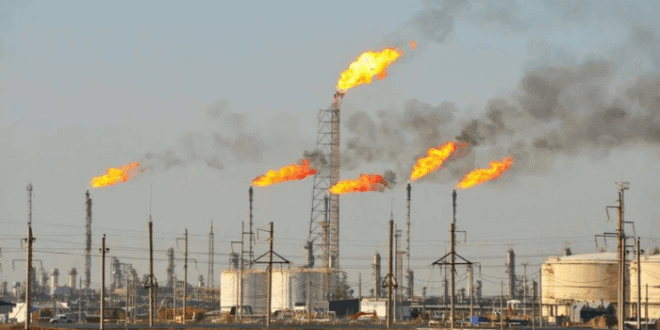
Data from the National Oil Spill Detection and Response Agency (NOSDRA) shows that oil and gas companies flared approximately 323.2 million standard cubic feet (scf) of gas in 2025, highlighting persistent inefficiencies in gas utilisation.
Although gas flaring declined from 349.3 million scf in 2020 to 230.1 million scf in 2022, the figures have risen again in recent years, reaching 301.3 million scf in 2024 before increasing further last year.
Energy analysts say the continued rise in gas flaring reflects the country’s struggle to fully commercialise associated gas resources, even as households and industries face energy shortages and rising electricity costs.
The Transmission Company of Nigeria confirmed that the reduction in gas supply has significantly affected electricity generation, leaving distribution companies with less power to deliver to consumers.
According to the Nigerian Independent System Operator (NISO), thermal plants require about 1,629.75 million standard cubic feet of gas daily to operate at optimal capacity.
However, as of February 23, 2026, actual supply stood at only 692 million scf per day, representing less than 43 percent of the required volume.
Industry stakeholders attribute the persistent gas shortages to weak regulatory enforcement, high infrastructure costs and relatively low penalties for gas flaring, which often make it cheaper for companies to flare gas than invest in processing or transportation facilities.
Records from NOSDRA indicate that oil companies paid about $646.3 million in penalties for gas flaring in 2025, but experts argue that the fines remain insufficient to discourage the practice.
Meanwhile, the Federal Government is exploring reforms to address the country’s electricity challenges.
Bola Tinubu recently proposed the creation of a Grid Asset Management Company (GAMCO) to strengthen the national electricity transmission system.
According to Mohammed Idris, Minister of Information and National Orientation, the proposed company will focus on improving the efficiency of the national grid and tackling transmission bottlenecks that have long constrained power supply.
Analysts warn that unless Nigeria strengthens gas infrastructure, improves regulatory enforcement and ensures adequate investment in the power sector, the country may continue to experience worsening electricity shortages despite its vast natural gas reserves.










