 African Telescope Independent Journalism. African Perspectives
Chibuzor Alli |
The United States and Venezuela have announced they will re-establish diplomatic and consular ties. The agreement aims to promote stability, bolster economic recovery, and foster political reconciliation between the two nations.
The development comes after years of estrangement, but notably follows the US military’s dramatic capture of Venezuelan President Nicolás Maduro in January. Although relations had been gradually improving since that incident, the formal announcement marks a significant and symbolic step forward.
The US government confirmed in a statement that both sides would work together on these fronts. The US embassy in Caracas, which was shuttered in 2019, has already reopened, and Washington has appointed a new diplomat to Venezuela. Meanwhile, sources suggest more US diplomatic staff from Bogotá are expected to be transferred to Caracas soon, facilitating face-to-face negotiations and consular services.
Venezuelan officials expressed their willingness to move into a “new stage of constructive dialogue, based on mutual respect.” They emphasized that the relationship must lead to the “social and economic happiness of the Venezuelan people.” However, Caracas made no mention of a transition or upcoming elections, contrasting with the US State Department’s stance that the move is part of a “phased process that creates the conditions for a peaceful transition to a democratically elected government.”
The context of the rapprochement is complex. The US has long accused Maduro—who is set to face trial in the US later this month—and his government of running a criminal organisation involved in illegal mining and drug trafficking. Meanwhile, the US continues to press for political change amid ongoing tensions.
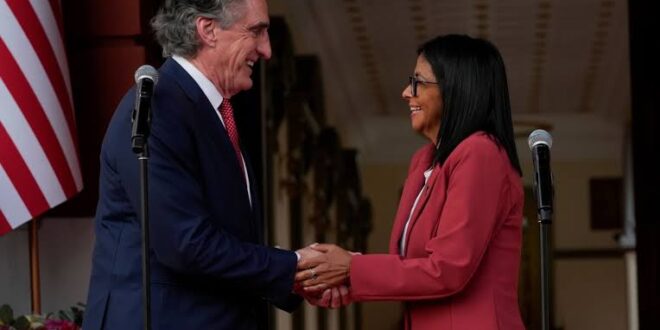
US Secretary of the Interior Doug Burgum, who recently visited Venezuela, described the diplomatic shift as a “brilliant strategic move” to counter Iran’s influence in the region. Burgum, leading President Trump’s National Energy Dominance Council, claimed that the intervention would help ensure “oil will flow to America.”
Since the military intervention and Maduro’s detention, the US has struck new oil agreements with Venezuela. Washington now permits the country to sell sanctioned oil under US oversight, and Venezuela has amended its laws to attract more foreign investment in its oil sector.
On Wednesday, Venezuelan interim president Delcy Rodríguez and Burgum announced plans for closer collaboration on developing the country’s vast mineral resources. Venezuela, home to the world’s largest proven oil reserves, is also rich in gold, diamonds, critical minerals, and rare earth elements—some essential for modern technologies like mobile phones.
As the two nations move toward renewed diplomatic relations, the world watches to see if this marks a turning point for Venezuela’s future.










