 African Telescope Independent Journalism. African Perspectives
Chibuzor Alli
Zimbabwe has turned down a US health deal worth $367 million (£272 million) over fears that Washington’s demands for sensitive data were unfair. The decision surfaced after a leaked government memo from December revealed President Emmerson Mnangagwa described the deal as “lopsided.”
A government spokesman explained that the US was insisting on access to biological samples for research and commercial purposes. However, he said Washington was unwilling to share the benefits for future vaccines and treatments.
“We will now turn to the difficult and regrettable task of winding down our health assistance in Zimbabwe,” US ambassador to Zimbabwe Pamela Tremont stated.
Her embassy added that the US had contributed more than $1.9 billion in health funding to Zimbabwe over the past twenty years.
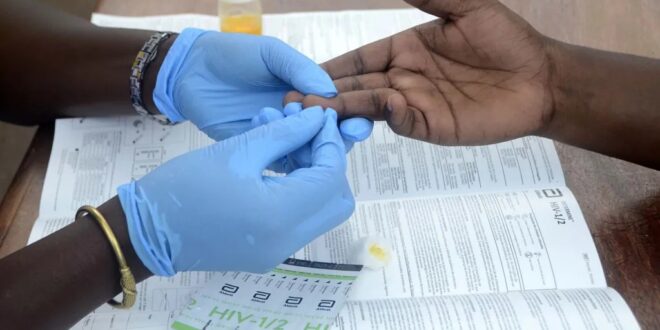
A Zimbabwean doctors’ association called for further dialogue, urging both sides to find a mutually acceptable deal so the country’s HIV programme can continue.
In December, Kenya’s High Court suspended a similar US-funded health agreement after a consumer rights lobby raised concerns about the safety of Kenyans’ health data.
Since taking office last year, US President Donald Trump has cut foreign aid and shut down the US Agency for International Development (USAID). The agency, which managed aid programmes, was deemed “wasteful” by Trump, who preferred government-to-government deals to boost transparency and accountability.
The US embassy in Zimbabwe revealed that 16 African countries have signed health pacts amounting to over $18.3 billion in new funding. The money intended for Zimbabwe would have gone toward HIV/AIDS treatment, tuberculosis, malaria, maternal and child health, and disease outbreak preparedness.
“We believe this collaboration would have delivered extraordinary benefits for Zimbabwean communities, especially the 1.2 million men, women, and children currently on US-supported HIV programmes,” Tremont said.
Zimbabwe’s government, however, dismissed the deal as “asymmetrical.”
“Zimbabwe was being asked to share its biological resources and data over an extended period, with no guarantee of access to any medical innovations—such as vaccines, diagnostics, or treatments—that might result from that shared data,” said government spokesperson Nick Mangwana.
He added, “In essence, our nation would provide the raw materials for scientific discovery without any assurance that the end products would be accessible to our people should a future health crisis emerge.”
Mangwana also criticised the US’s withdrawal from the World Health Organization (WHO) and its shift toward bilateral health agreements, which he said disrupted existing global health structures.
He cited the WHO’s Pathogen Access and Benefit Sharing scheme, designed to ensure equitable sharing of benefits, including vaccines and treatments, when countries contribute data.
“Our reservations over the US deal should not be mistaken for anti-American sentiment,” Mangwana emphasized.
“We welcome continued dialogue with our American counterparts on structuring future cooperation that respects the sovereignty and dignity of both nations.”
The Zimbabwe College of Public Health Physicians (ZCPHP) acknowledged the government’s concerns but urged negotiations to continue, noting that much of the country’s HIV programmes depend on external funding.
“Technical issues, including data governance or implementation frameworks, can often be addressed through clarification and negotiated safeguards,” it stated.










