 African Telescope Independent Journalism. African Perspectives
By African Telescope |
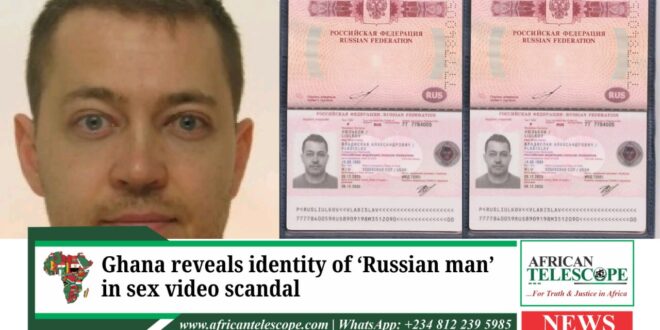
Ghanaian authorities have identified a Russian national at the centre of a viral scandal involving the secret filming and online circulation of intimate videos of African women and have begun moves to secure his extradition.
The suspect has been named as 36-year-old Vladislav Aleksandrovich Liulkov, whose Russian passport, issued in December 2025, is valid until 2035.
Government officials said the release of his passport details was aimed at ending speculation surrounding his identity and nationality.
Communications Minister Sam Nartey George said Ghana now has a legal pathway to pursue the suspect once he leaves Russia.
“The Government of Ghana has his passport. Once the individual sets foot outside Russia, we have a legal route to make him answer for his actions within Ghana,” the minister said.
Authorities in Ghana and Kenya are jointly examining reports that the man secretly recorded sexual encounters with women in both countries and distributed the footage online without their consent.
African and Russian media reports described the suspect as a self-styled “pick-up artist” and online blogger who allegedly used covert recording devices, including camera-fitted sunglasses, to film some encounters. Officials, however, said these specific claims were still under investigation.
The case has triggered outrage across Ghana and beyond after videos featuring several African women, including Kenyans, circulated on social media and paid platforms.
Authorities said the content was shared without the victims’ knowledge or permission.
Ghana has indicated it will formally request the man’s extradition from Russia, while Kenyan authorities say the matter is being handled with urgency due to its cross-border nature.
Ghana’s Ministry of Foreign Affairs has also summoned Russian Ambassador Sergei Berdnikov to protest the allegations and seek cooperation.
While the envoy acknowledged the seriousness of the matter and expressed willingness to assist, he reportedly raised questions about the suspect’s citizenship status.
Officials said the alleged actions amount to a grave violation of privacy and dignity and a breach of Ghana’s cybersecurity laws.
Under Ghanaian law, the non-consensual recording and dissemination of intimate content attracts severe penalties, with authorities stressing that prosecution would proceed whether or not the suspect is physically present in the country.
Victims have been encouraged to come forward with evidence to support ongoing investigations.
In Kenya, Gender, Culture and Children Services Cabinet Secretary Hanna Cheptumo described the case as a serious instance of gender-based violence, noting that security and prosecutorial agencies had been directed to pursue the matter with urgency and in collaboration with international partners.
Under Kenya’s Computer Misuse and Cybercrimes Act of 2018, anyone found guilty of publishing intimate images of another person faces up to two years’ imprisonment.










