 African Telescope Independent Journalism. African Perspectives
Chibuzor Alli
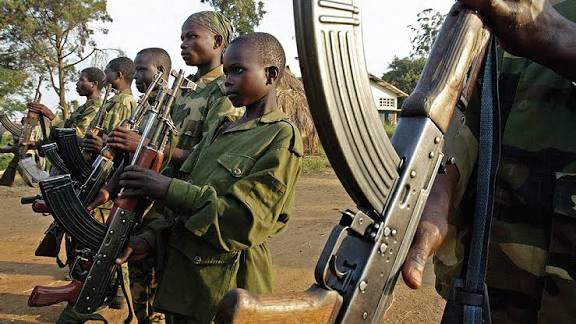
The United Nations has named Nigeria among the five countries with the highest levels of child soldier recruitment, warning that a worsening global conflict crisis is driving thousands of children into the ranks of armed groups.
The UN Special Representative for Children and Armed Conflict, Vanessa Frazier, disclosed this in an interview with UN News ahead of the International Day against the Use of Child Soldiers.
“The recruitment and use of children is still one of the most widespread and devastating violations we face. In 2024 alone, over 7,400 children were recruited or used by armed forces and armed groups — and those are only the verified cases,” she said.
The UN reports that the highest levels of violations are currently recorded in the Democratic Republic of the Congo, Nigeria, Somalia, Syria and Myanmar. There are also emerging concerns in Sudan, where children are reportedly being used as border guards and active fighters.
Frazier noted that beyond the statistics are real lives disrupted by violence.
“Each number in our report represents a child whose innocence has been interrupted,” she said.
In Nigeria’s North-East, thousands of children have been impacted by insurgency over the past decade, including abductions and forced recruitment by armed groups such as Boko Haram.
Drawing from field visits and interactions with survivors, she described the human cost of the crisis.
“You hear about a 13-year-old girl holding her baby, and you realise how deeply conflict steals childhood,” she said. “Those numbers in our reports are individuals — children who were supposed to have their whole future ahead of them.”
Over the last 30 years, the UN mandate on children and armed conflict has facilitated the separation of more than 220,000 children from armed groups. The Special Representative’s office negotiates directly with parties to conflict to secure the release of minors.
Following their release, the UNICEF and partner organisations provide psychosocial support, education and reintegration services. However, reintegration remains challenging, especially for girls.
“Girls who return may be shunned by their communities, especially those who come back with children,” Frazier noted.
She emphasised that prevention must remain central to global response efforts.
“Prevention is better than cure. Even in times of war, children must remain in school. When they are out of school, they become very vulnerable to recruitment, whether forced or not,” she said.
Frazier also highlighted the role of accountability, referencing prosecutions in national courts and cases before the International Criminal Court involving the recruitment of children.
“One of the greatest tools of deterrence is justice and accountability,” she said. “When armed group leaders are prosecuted and sentenced, it sends a powerful message that this crime carries real consequences.”
She stressed that sustainable peace depends on safeguarding children and guaranteeing their right to education.
“The sustainability of peace depends on children’s right to take it forward,” she said. “When they return from conflict, they must have access to education and the chance to aspire — to become doctors, nurses, lawyers, engineers. That can only be achieved through education.”
Through her campaign, Prove It Matters, children affected by war send handwritten messages to world leaders, folded into origami doves as symbols of peace.
“Children should never be treated as collateral of war,” she said. “Protecting them is not optional — it is the foundation of a sustainable and peaceful future.”










